June 22, 2021 Technical Meeting: Power-Electronics-Enabled Autonomous Power Systems: Next-Generation Smart Grids
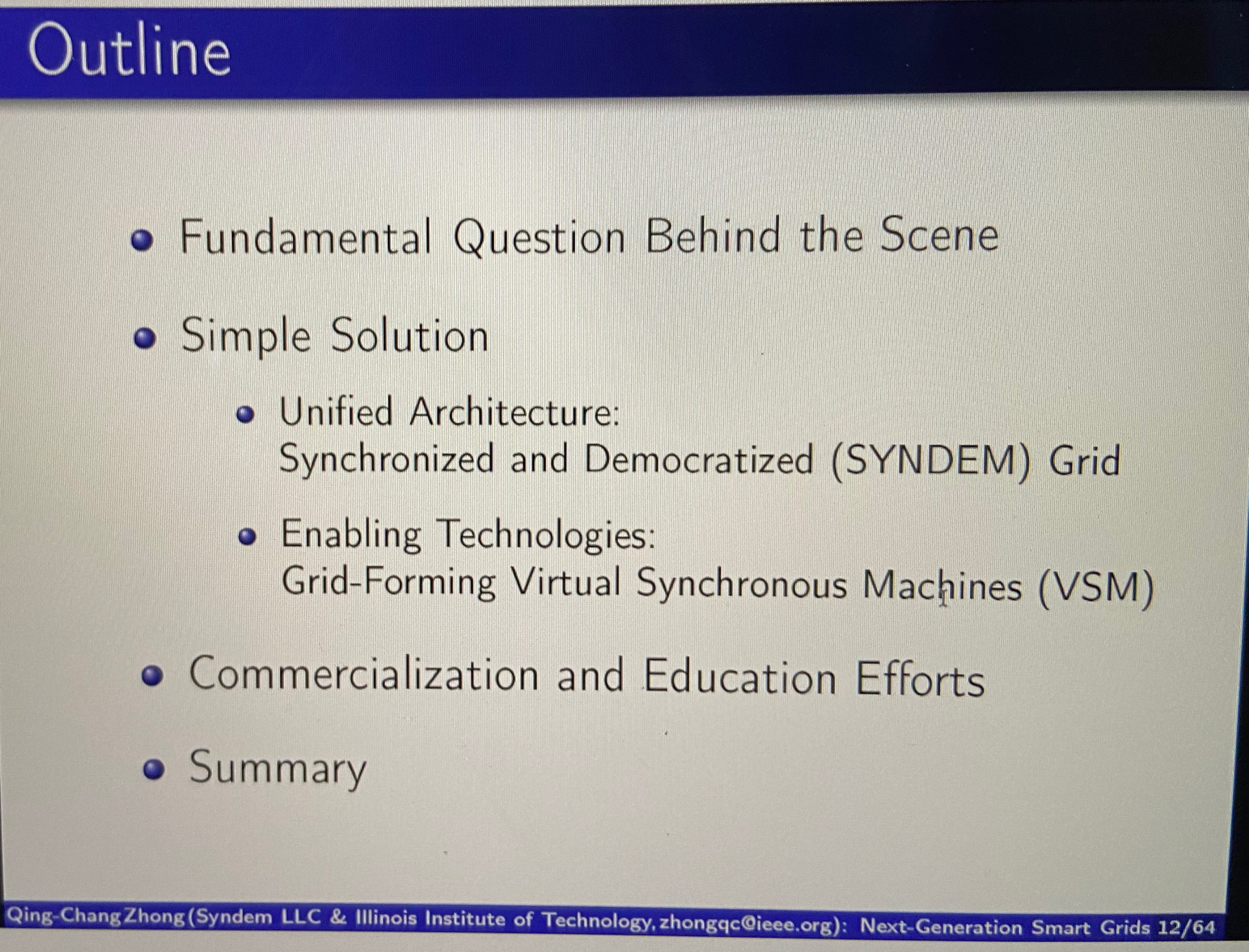
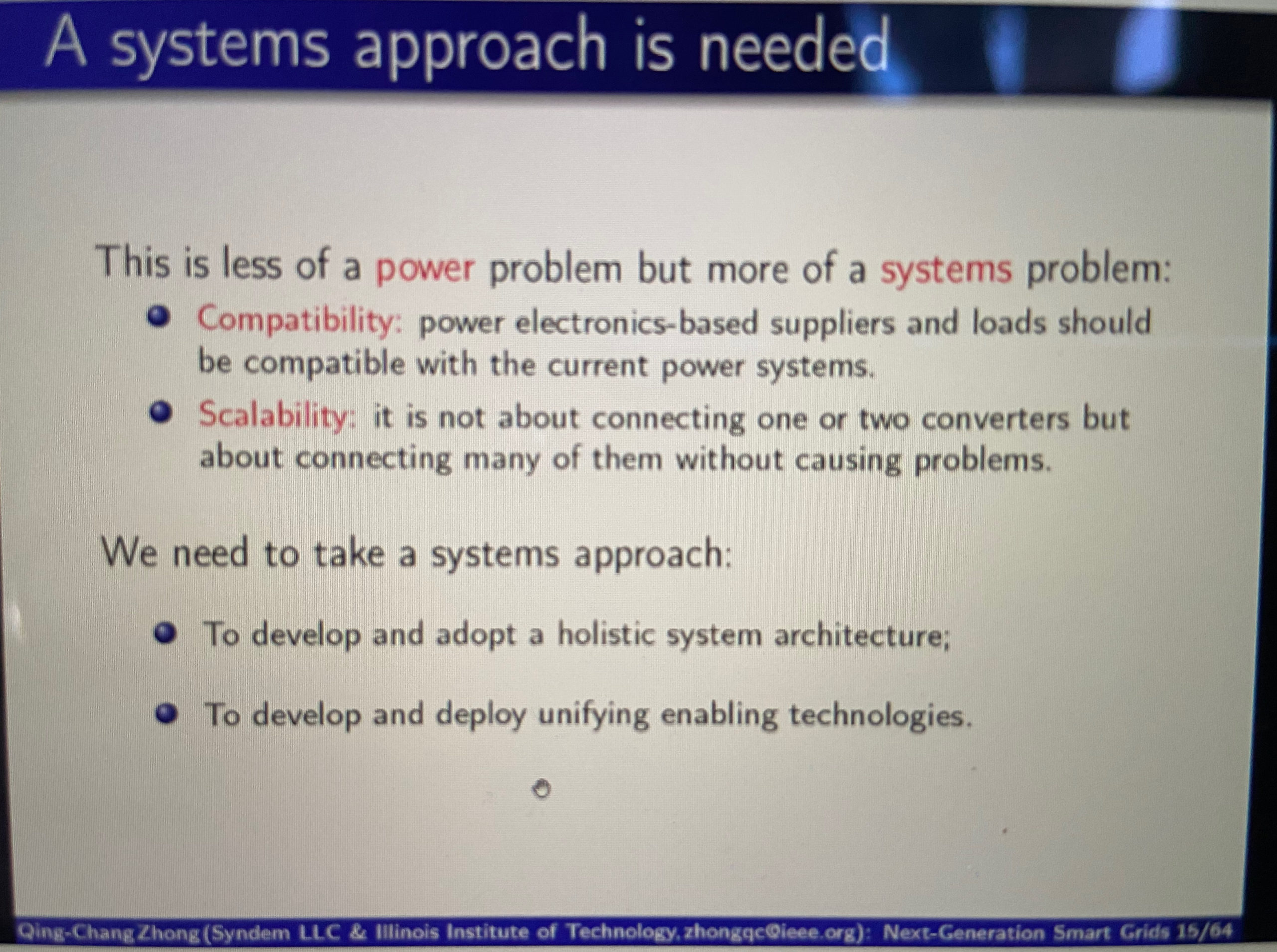
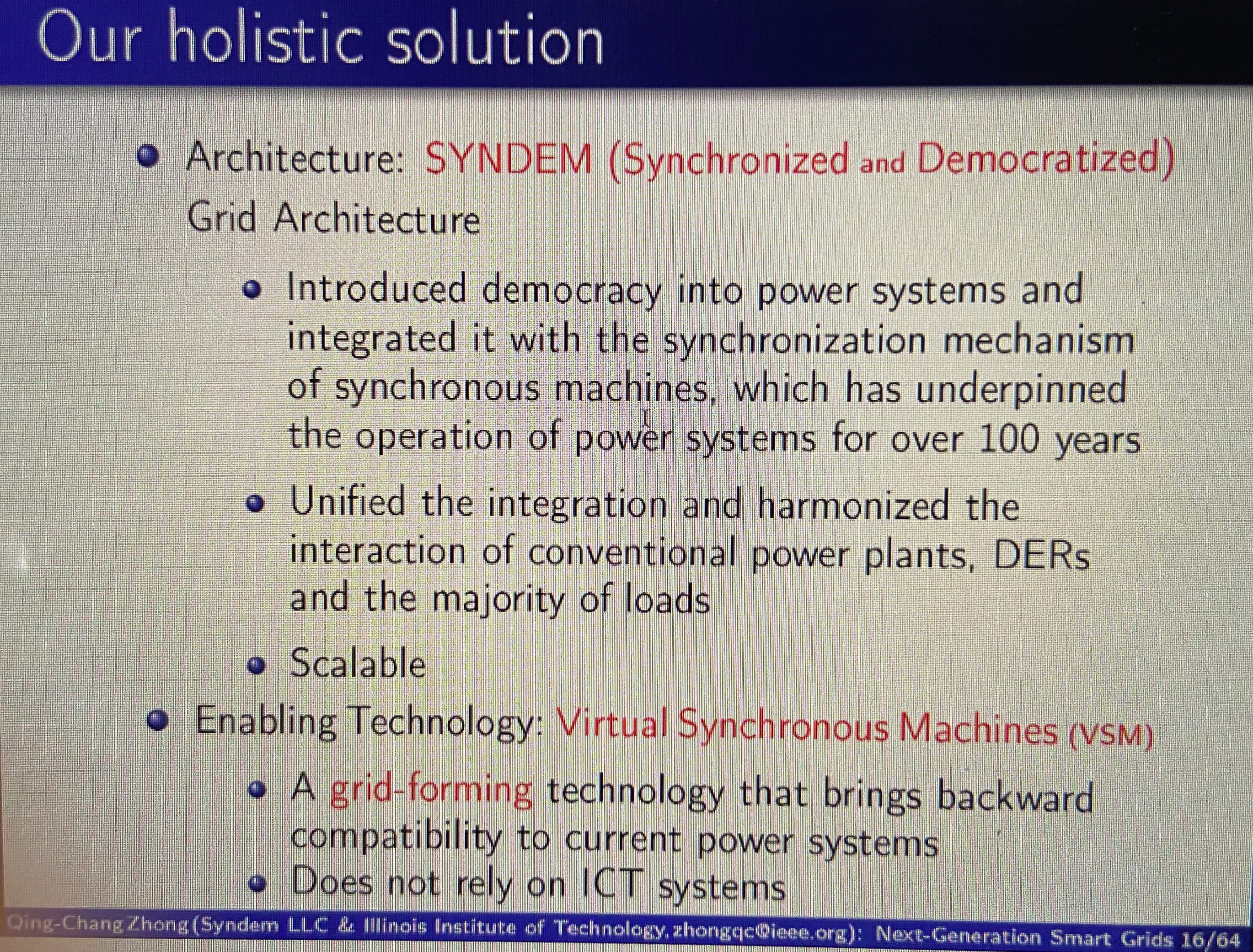
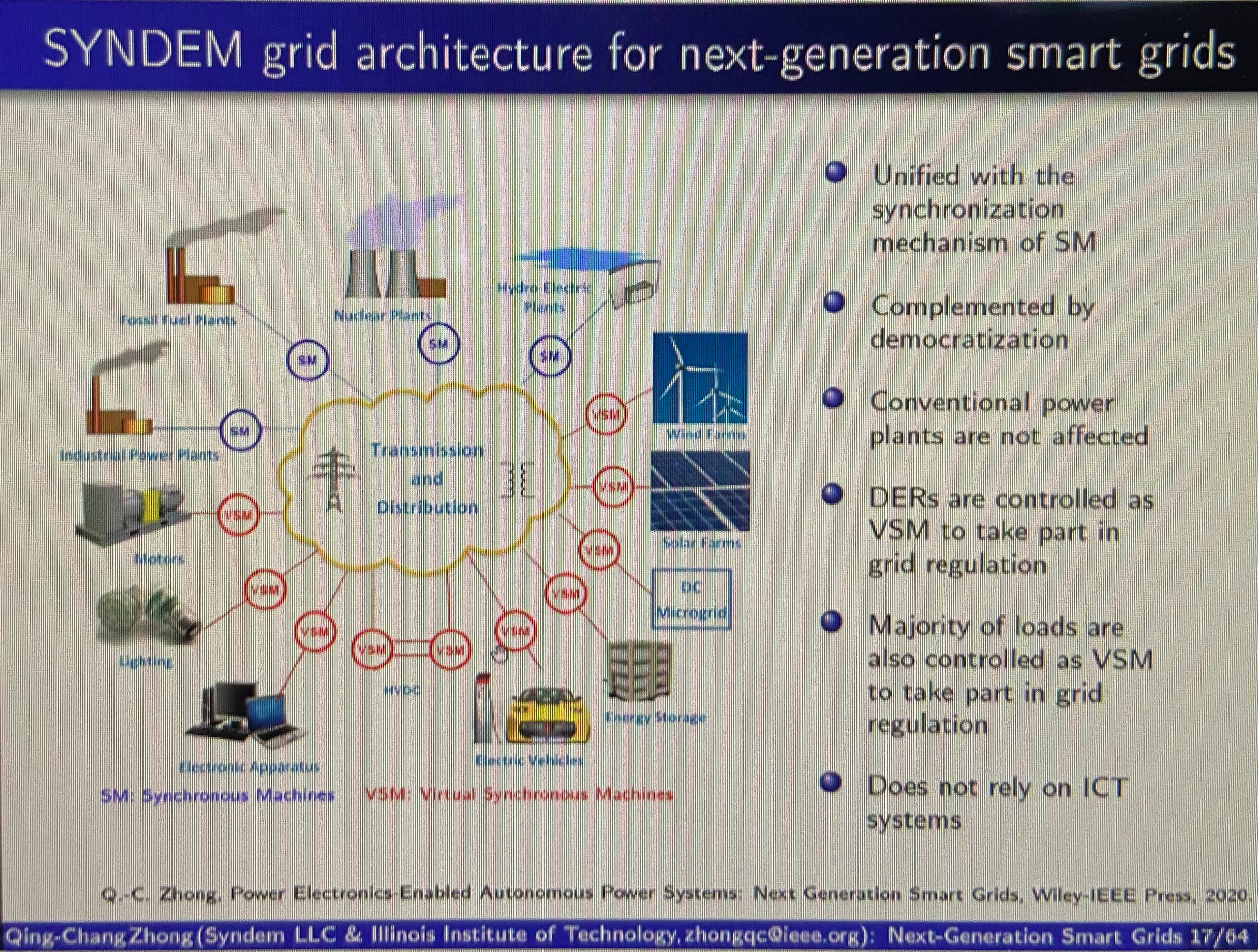
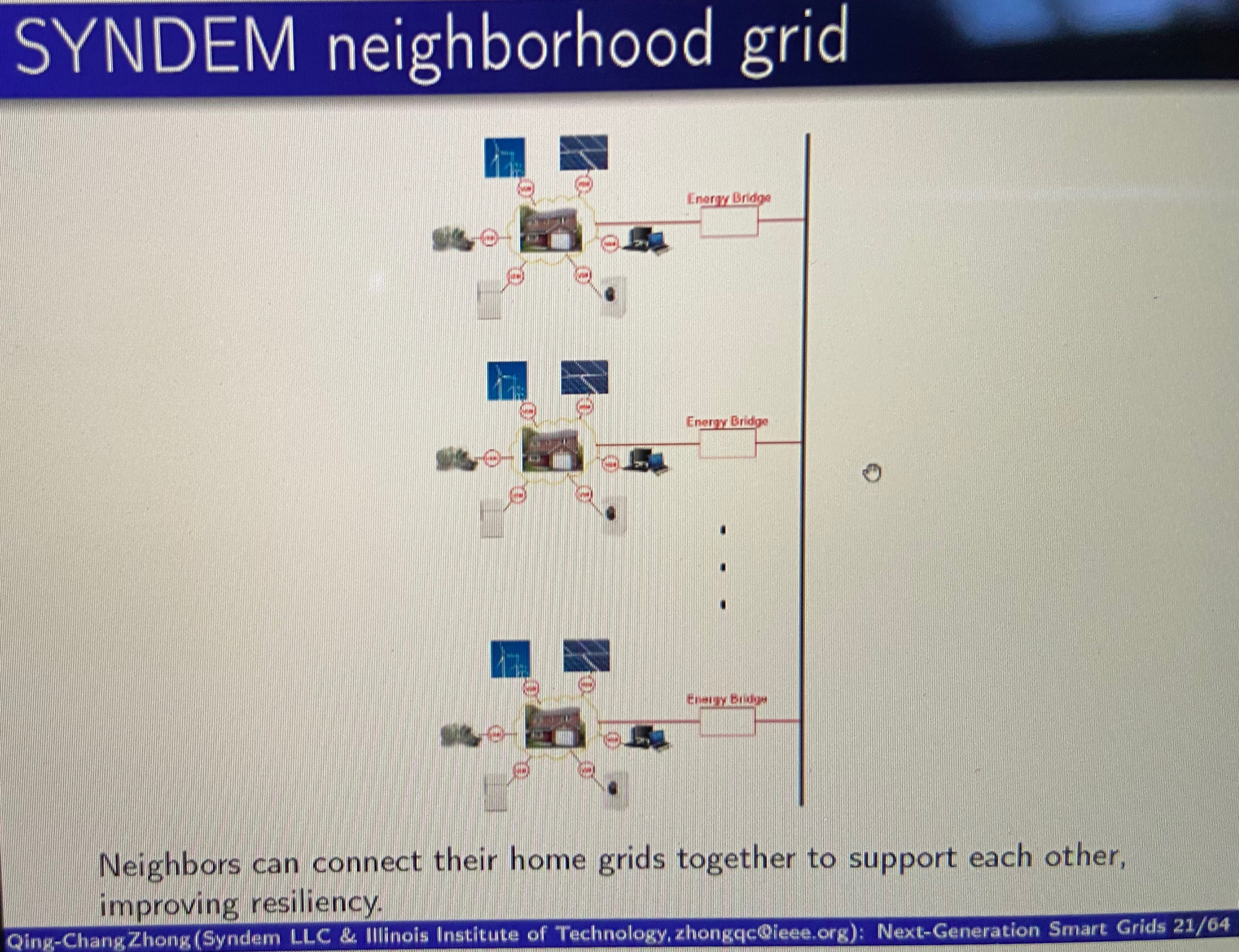
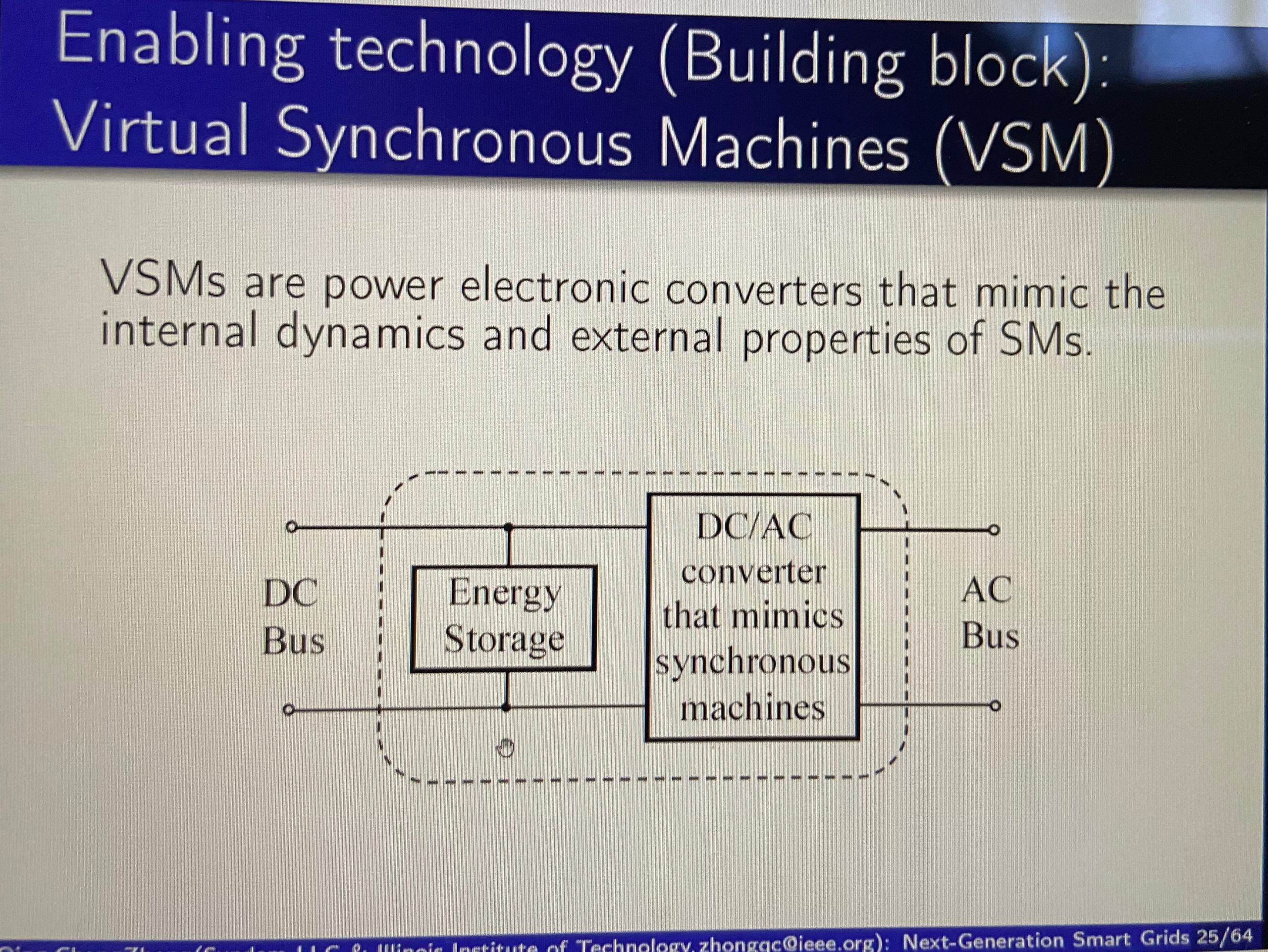
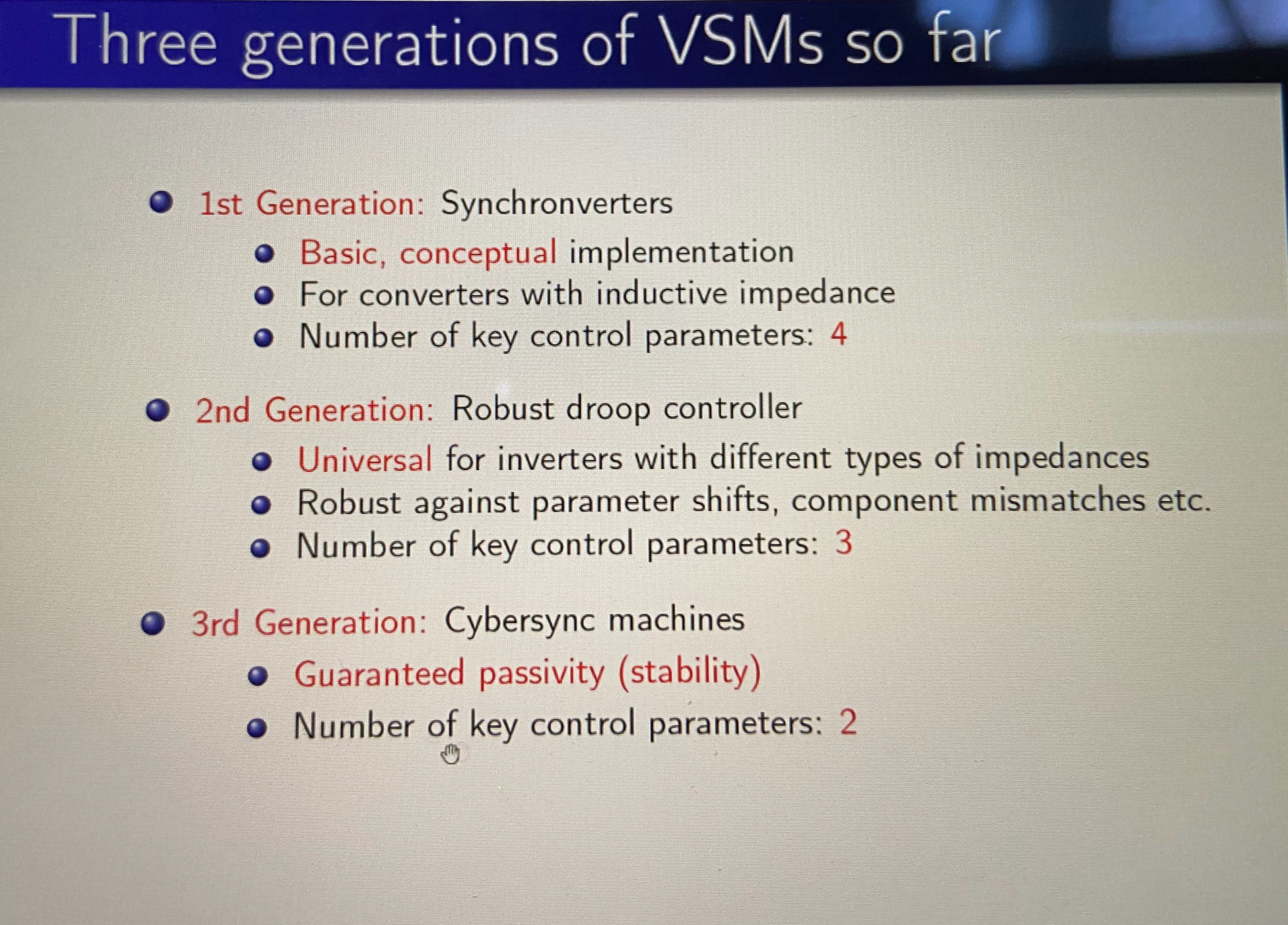
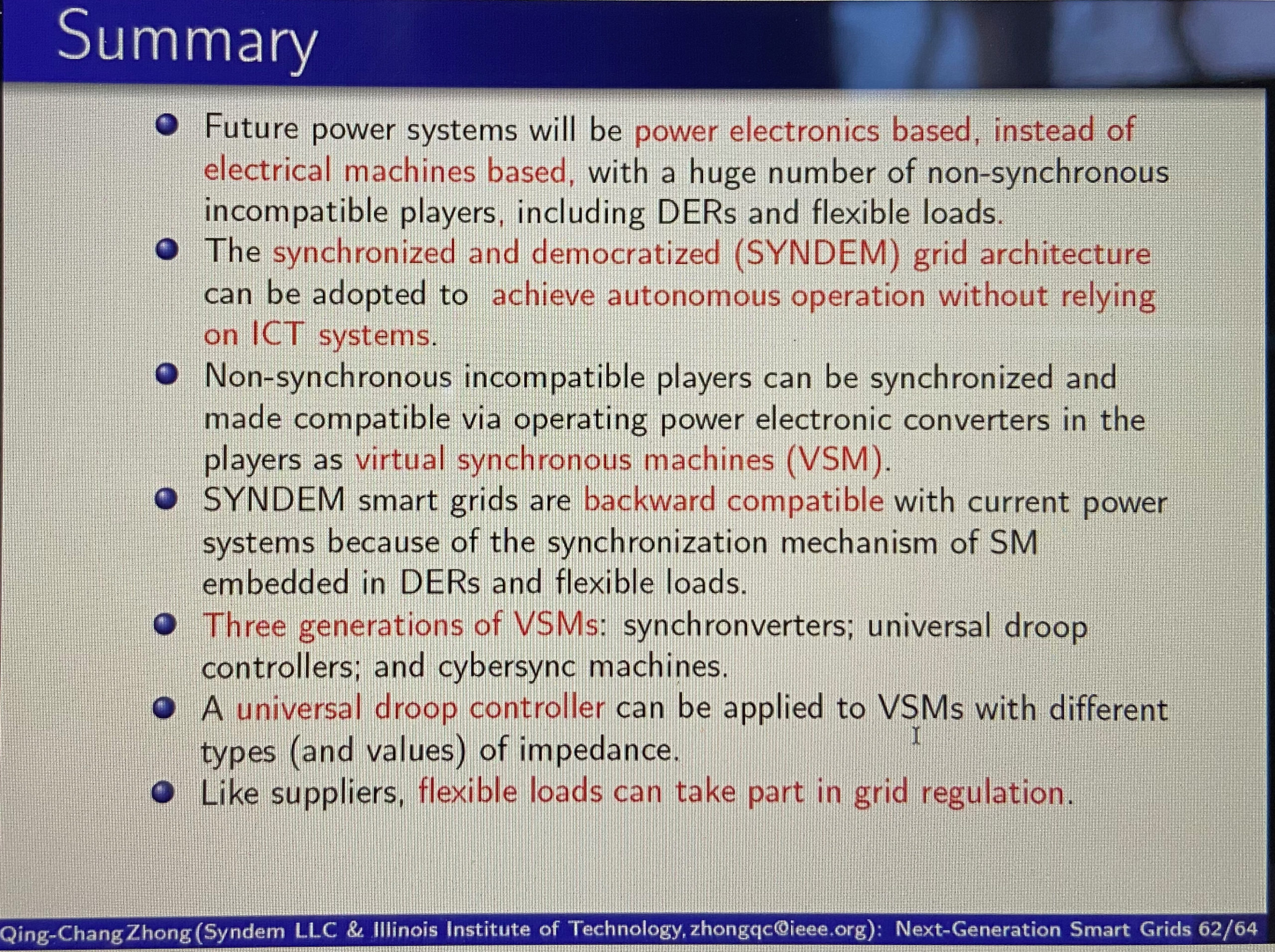
On June 22nd, IEEE (PI)2 Austin hosted a virtual and in-person Technical Meeting entitled “Power-Electronics-Enabled Autonomous Power Systems: Next-Generation Smart Grids” Dr. Qing-Chang Zhong of the Illinois Institute of Technology, Chicago, a Distinguished Lecturer of three IEEE Societies discussed his research and vision that future power systems will be power-electronics-enabled with millions of heterogeneous active players, rather than electric-machines-based with thousands of homogeneous generators. Dr. Zhong discussed a holistic grid architecture, which he referred to as the SYNDEM (synchronized and democratized) grid architecture, together with its technical routes, which will accelerate a paradigm shift and harmonize future power systems. He explained that millions of power-electronics-enabled active players, large or small, supplying or consuming, can be controlled to behave like virtual synchronous machines so that they can equally, autonomously, and actively take part in the regulation of system frequency and voltage. Moreover, he stated that the communication infrastructure can be released from the low-level control of power systems, opening up the prospect of achieving autonomous operation for future power systems without relying on communication networks. Dr. Zhong concluded that this holistic solution could considerably enhance the stability, scalability, operability, security, reliability and resiliency of the next-generation smart grid.
For latest developments and live discussions, join LinkedIn Group: https://www.linkedin.com/groups/7061909/

Dr. Qing-Chang Zhong, Fellow of IEEE and IET, is the Max McGraw Endowed Chair Professor in Energy and Power Engineering and Management at Department of Electrical and Computer Engineering, Illinois Institute of Technology, Chicago, USA, and the Founder and CEO of Syndem LLC, USA. He was educated at Imperial College London (PhD, 2004, winning the Best Doctoral Thesis Prize), Shanghai Jiao Tong University (PhD, 2000), Hunan University (MSc, 1997), and Hunan Institute of Engineering (Diploma, 1990).