IEEE Denver Computer, Information Theory, and Robotics Society – Technical Meeting
13 October 2022 @ 6:00 PM – 7:00 PM MDT
Dr. Stephan Gerali
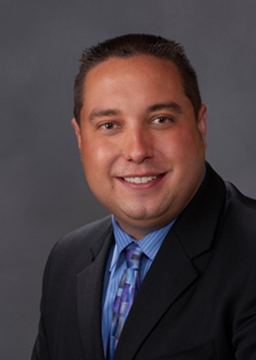
- Denver IEEE Computer Society Guest Lecturer
- Chief Software Architect and Engineer
- Lockheed Martin Fellow
Dr. Stephan Gerali has his B.S., M.S. and Ph.D. in Computer Science from the University of Colorado and his MBA from Colorado State University, and is certified in Java, BEA WebLogic, Six Sigma and Secure Software Engineering. Dr. Gerali is a Lockheed Martin Fellow specializing in Software Architecture / Software Engineering with more than 24 years of experience working on large-scale distributed systems. Currently, Stephan is the Chief Architect for the Chief Data & Analytics Office for the Lockheed Martin Enterprise business area specializing in its digital transformation journey with data. Within Lockheed Martin, Dr. Gerali has supported IS&GS (Information Systems & Global Solutions) in Army (All Source Analysis System and Future Combat System), USSTRATCOM (Strategic Threat Analysis Reporting System) and Air Force (Single Integrated Space Picture) command and control systems, and within EIT (Enterprise IT) has supported LMPeople, LMCareers, Performance Based Logistics, University Relations Recruiter’s Network, Center for Leadership Excellence, Non-Employee Access Tracking, Infrastructure Health Management, Event Correlation & Analysis, Enterprise Data Warehouse / Business Intelligence, Digital Tapestry and Model Based Engineering.
Presentation: IoT for Defense and National Security
Abstract: IoT for Defense and National Security covers topics on IoT security, architecture, robotics, sensing, policy, operations, and more, presenting the latest results from the U.S. Army’s Internet of Battle Things and the U.S. Defense Department’s premier IoT research initiative. The presentation discusses organizational challenges in converting defense industrial operations to IoT and summarizes policy challenges and recommendations for controlling government use of IoT in free societies. As a modern reference, this presentation covers multiple technologies in IoT solution deployment that include KepServerEX for edge connectivity to industrial protocols, AWS IoT Core for IoT data processing, Amazon S3 for scalable storage of IoT Data, and more. To aid in reader comprehension, the text uses case studies illustrating the challenges and solutions for using robotic devices in defense applications, plus case studies on using IoT for a defense industrial base. Content developed by leading researchers and practitioners of IoT technology for defense and national security, IoT for Defense and National Security also includes information on:
- IoT resource allocation via mixed discrete/continuous optimization (monitoring existing resources and reallocating them in response to adversarial actions)
- principles of robust learning and inference for Internet of Battlefield Things (IoBTs), covering methodologies to make machine learning models provably robust
- AI-enabled processing of environmental sounds in commercial and defense environments, such as detecting faults in industrial manufacturing
- vulnerabilities in tactical IoT systems that come about due to the intrinsic nature of building networks using several devices and components
For application engineers from security and defense-related companies and professors and students in military courses, IoT for Defense and National Security is a one-of-a-kind resource of the topic, providing expansive coverage of an important yet sensitive topic that is often shielded from the public due to classified or restricted distributions.
IEEE Denver Computer, Information Theory, and Robotics Society – Technical Meeting
8 September 2022 @ 6:00 PM – 7:00 PM MDT
Mr. Chandler Bauder

- Denver IEEE Computer Society Guest Lecturer
- Phd Student, Department of Electrical Engineering, University of Tennessee
- Graduate Research Assistant
Chandler J. Bauder is a graduate student currently pursuing his Ph.D. in electrical engineering at the University of Tennessee, Knoxville TN. Chandler Bauder also received the B.S. degree (summa cum laude) in electrical engineering from the University of Tennessee. During Mr. Bauder’s undergraduate work he was a part of the Chancellor’s Honors Program at the University of Tennessee Knoxville. In 2017, Mr. Bauder was awarded the Gonzalez Family Award for Outstanding EE Junior. In 2018, Mr. Bauder has also been awarded the Chancellor’s Award for Extraordinary Academic Achievement, in 2019 and 2020 the Chancellor’s Award for Extraordinary Professional Promise. Mr. Bauder has been working as a Graduate Research Assistant in the Department of Electrical Engineering and Computer Science at the University of Tennessee Knoxville, since 2018. There Mr. Bauder has worked on various projects involving ground penetrating radar, microstrip filter design, radar and camera signal processing for vital sign detection, and multi-factor breakdown simulation of RF components. In May 2021, Mr. Bauder began working as an intern at the U.S. Naval Research Laboratory Radar Division’s Advanced Concepts Group on a project involving microwave power beaming. Mr. Bauder is also a proud Graduate Student Member within the IEEE.
Presentation: Using mm-Wave Radar for Non-Contact Heart Rate Monitoring
Abstract: Extracting accurate heart rate estimates of human subjects from a distance in high-noise scenarios using radar is a common problem. Often, frequency components from sources such as movement and vital signs from other subjects can overpower the weak reflected signal of the heart. In this study, we propose a signal-processing scheme using an Adaptive Multi-Trace Carving algorithm (AMTC) to accurately detect the heart rate signal over time in non-ideal scenarios using a mm-wave radar. In our initial proof-of-concept results, we show a low heart rate estimation mean absolute error (MAE) of 3 bpm for a single subject marching in place and less than 4.5 bpm for a scenario of two human subjects at the same distance from the radar.
IEEE Denver Computer, Information Theory, and Robotics Society – Technical Meeting
9 June 2022 @ 6:00 PM – 7:00 PM MT
Dr. Zhihui Zhu
- Assistant Professor, Department of Electrical and Computer Engineering, University of Denver
Dr. Zhihui Zhu is currently an Assistant Professor with the Department of Electrical and Computer Engineering, University of Denver. Dr. Zhu received the Ph.D. degree in electrical engineering from the Colorado School of Mines, Golden, CO, USA, in 2017. Dr. Zhu was a Post-Doctoral Fellow with the Mathematical Institute for Data Science, Johns Hopkins University, Baltimore, MD, USA, from 2018 to 2019. Dr. Zhu’s research interests include the exploitation of inherent low-dimensional structures within data and signals, and the design, analysis, and implementation of optimization algorithms for machine learning and signal processing.
Presentation: Understanding Neural Collapse in Deep Learning
Abstract: In the past decade, the revival of deep neural networks has led to dramatic success in numerous applications ranging from computer vision, to natural language processing, to scientific discovery and beyond. Nevertheless, the practice of deep networks has been shrouded with mystery as our theoretical understanding for the success of deep learning remains elusive.
In this talk, we will focus on the representations learned by deep neural networks. For example, neural collapse is an intriguing empirical phenomenon that persists across different neural network architectures and a variety of standard datasets. This phenomenon implies that (i) the class means and the last-layer classifiers all collapse to the vertices of a Simplex Equiangular Tight Frame (ETF) up to scaling, and (ii) cross-example within-class variability of last-layer activations collapses to zero. We will provide a geometric analysis for understanding why this happens on a simplified unconstrained feature model. We will also exploit these findings to improve training efficiency: we can set the feature dimension equal to the number of classes and fix the last-layer classifier to be a Simplex ETF for network training, reducing memory cost by over 20% on ResNet18 without sacrificing the generalization performance.
IEEE Denver Computer, Information Theory, and Robotics Society – Technical Meeting
12 May 2022 @ 5:30 PM – 6:30 PM MT
Mr. Yiran Cui
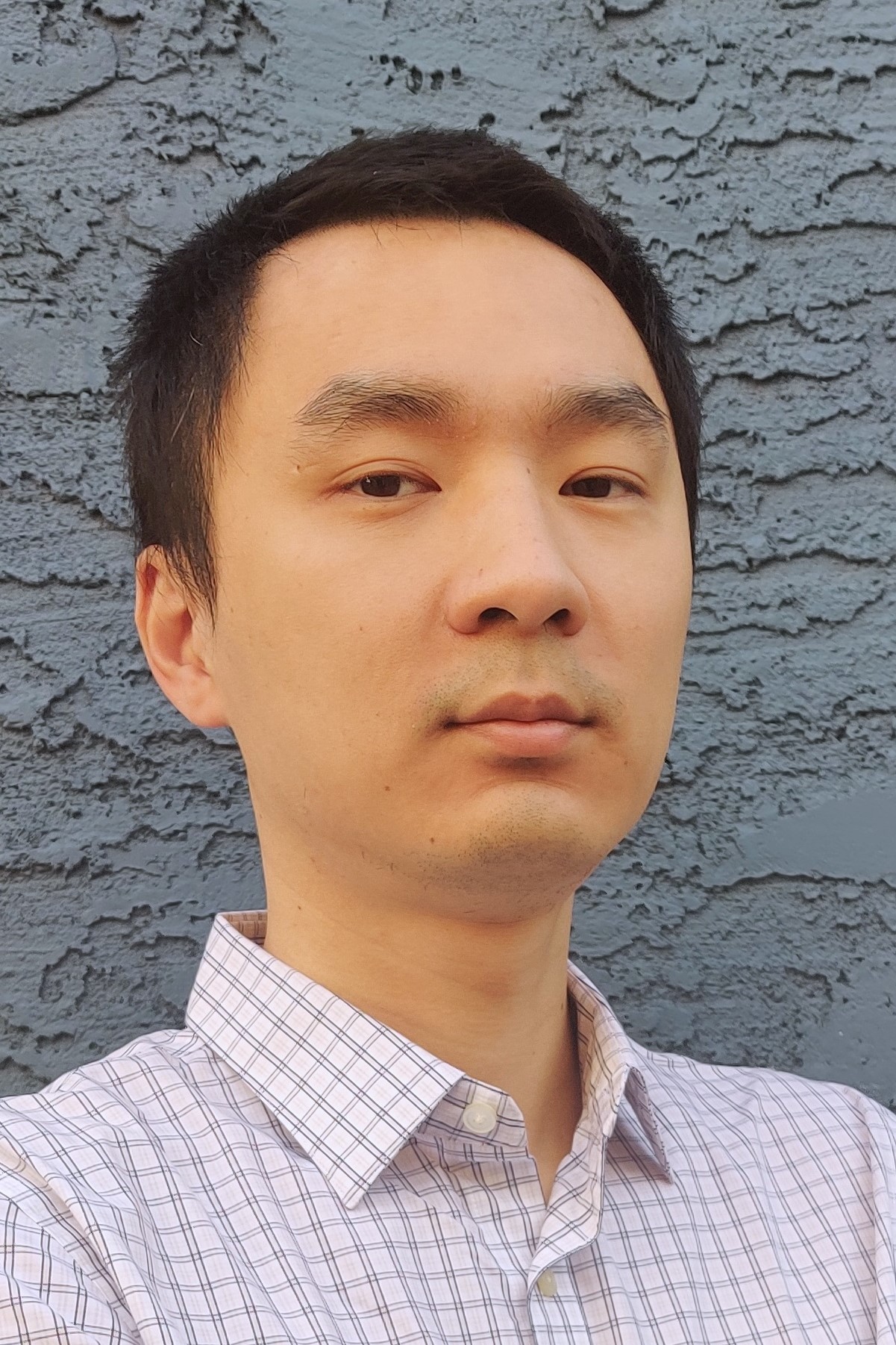
- Ph.D. Candidate, School of Electrical, Computer and Energy Engineering, Arizona State University
Mr. Yiran Cui is currently pursuing his Ph.D. degree in the School of Electrical, Computer and Energy Engineering, Arizona State University. Mr. Cui received his Bachelor’s and Master’s degrees from Anhui Normal University, Wuhu, China, in 2012, and University of Electronic Science and Technology of China, Chengdu, China, in 2015, respectively. Mr. Cui’s research interests mainly include quasi-optical techniques, mmW/THz imaging applications, mmW/THz measurements, and antennas.
Presentation: 3D Non-Line-of-Sight Imaging Using Terahertz Signals
Abstract: Although traditional optical cameras can produce high-resolution pictures, using a terahertz (THz) camera, we can see objects that are not only in the direct line-of-sight but also occluded. This can inspire new applications ranging from autonomous navigation to wireless communications.
In this talk, we propose a THz non-line-of-sight (NLoS) imaging method that can help us reveal invisible targets behind occlusions. This method takes advantage of wave scattering from LoS rough surfaces to transmit signals to the NLoS scene. We show that common building materials can perform similar to mirrors in the THz range such that an NLoS scene can be imaged via the signal specular reflections from them. However, this phenomenon also results in incorrect raw images as the NLoS objects would appear at the wrong locations with false orientations. Therefore, we introduce the mirror folding method which can account for the signal reflections and correct the raw images. We also demonstrate the proposed THz NLoS imaging approach using experiments in various scenarios. The results show that the hidden scene can be properly reconstructed with centimeter-scale resolution at several meters away.
IEEE Denver Computer, Information Theory, and Robotics Society – Technical Meeting
10 March 2022 @ 6:00 PM – 7:00 PM MT
Dr. Nisar Ahmed
- Associate Professor, Aerospace Engineering Sciences, University of Colorado Boulder
- CU Boulder Co-site Director for NSF IUCRC Center for Unmanned Aircraft Systems
- Courtesy Appointment, Department of Computer Science, University of Colorado Boulder
Dr. Nisar Ahmed is an Associate Professor and H.J. Smead Faculty Fellow in the Smead Aerospace Engineering Sciences Department at the University of Colorado Boulder, and holds a courtesy appointment in the Computer Science Department. Dr. Ahmed is a member of the Research and Engineering Center for Unmanned Vehicles (RECUV) and directs the Cooperative Human-Robot Intelligence (COHRINT) Lab. Dr. Ahmed’s research interests are in modeling, estimation and control of intelligent autonomous systems, especially for problems involving human-robot interaction, distributed sensor and information fusion, and decision-making under uncertainty. Dr. Ahmed received his B.S. in Engineering from Cooper Union in 2006, and Ph.D. in Mechanical Engineering from Cornell University in 2012 through an NSF Graduate Research Fellowship. Dr. Ahmed was a postdoctoral research associate in the Cornell Autonomous Systems Lab from 2012 to 2014. Dr. Ahmed was awarded the 2011 AIAA Guidance, Navigation, and Control Conference Best Paper Award; and an ASEE Air Force Summer Faculty Fellowship in 2014; and the 2018 Aerospace Control and Guidance Systems Committee (ACGSC) Dave Ward Memorial Lecture Award. Dr. Ahmed’s work has been supported by the Army, Air Force, DARPA, Navy, NASA, Space Force, and multiple industry sponsors. Dr. Ahmed has also organized several international workshops and symposia on autonomous robotics, sensor fusion, and human-autonomy interaction. Dr. Ahmed is a Member of the IEEE and the AIAA Intelligent Systems Technical Committee, and he is the CU Co-Site Director of the NSF IUCRC Center for Unmanned Aerial Systems (C-UAS).
Presentation: Cooperative Bayesian Intelligence for Aerospace Autonomy
Abstract: As imperfectly designed agents in an uncertain world, autonomous systems will never work “out of the box” exactly as desired. By taking on tasks that push the technological limit, autonomous systems will encounter unexpected situations that go beyond their immediate capabilities. Autonomous systems must therefore be able to continuously and independently gather, process, and act on imperfect information. They must also be cognizant of what they can and cannot accomplish on their own and know when/how to seek help. In aerospace applications and beyond, scalable human-machine and machine-machine interactions will be essential for reinforcing the core perception, planning, learning, and reasoning algorithms that make machine autonomy on any one platform possible.
This talk will discuss innovative Bayesian algorithmic approaches developed by the COHRINT Lab at CU Boulder that enable autonomous systems to opportunistically leverage different available kinds of human-machine and machine-machine interaction while performing challenging tasks in the presence of complex uncertainties. I will focus in detail on our group’s work on probabilistic modeling, inference, and optimization techniques for augmenting autonomous state estimation and decision-making algorithms running onboard autonomous systems with inputs from human teammates, task assistants and supervisors. I will describe how our approaches connect rigorous statistical modeling and learning techniques with “plug-and-play” semantic interfaces that can readily adapt to a variety of applications and users. Results from aerospace applications such as unmanned air/ground reconnaissance, missile defense, and space robotics will show how our methods allow human-machine systems to “cut knots and fill in gaps” in fundamentally novel ways for challenging problems.
IEEE Communications Society Denver Chapter & IEEE Denver Computer, Information Theory, and Robotics Society – Technical Meeting
05 March 2022 @ 10:00 AM – 11:15 AM MT
Dr. Fabrizio Granelli
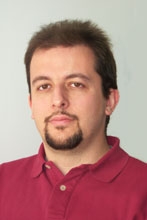
- Professor, Dept. of Information Engineering and Computer Science (DISI) of the University of Trento (Italy)
- IEEE ComSoc Distinguished Lecturer for 2021-22
- IEEE ComSoc Director for Conference Development for 2022-23
Dr. Fabrizio Granelli received the Laurea (M.Sc.) and Ph.D. degrees from the University of Genoa, Italy, in 1997 and 2001, respectively. Prof. Granelli has been a visiting professor at the State University of Campinas (Brazil) and in 2016 he was visiting professor at the University of Tokyo (Japan). Prof. Granelli served as IEEE ComSoc Distinguished Lecturer for the period 2012-15 (2 terms), ComSoc Director for Online Content in 2016-17, Delegate for Education at DISI in 2015-2017, and IEEE ComSoc Director for Educational Services (2018-19). Prof. Granelli has participated as an organizer in the most relevant international conferences, such as TPC Co-Chair of several symposia at IEEE ICC and IEEE GLOBECOM, and as TPC Co-Chair of the IEEE NFV SDN conference (2018 and 2019), and is currently TPC Chair for IEEE GLOBECOM 2022. Since 2019, Prof. Granelli has been the Founding Chair of the Aerial Communication Emerging Technology Initiative of IEEE Communications Society. Author or co-author of more than 250 papers published in international journals, books and conferences, Prof. Granelli is also Associate Editor-in-Chief of IEEE Communications Surveys and Tutorials.
Presentation: Emulating Modern SDN and NFV Networks: The ComNetsEmu Environment
Abstract: Networks are evolving rapidly under the pressure of the emerging Software Defined Networking (SDN) and Network Function Virtualization (NFV) paradigms. Indeed, the joint usage of SDN and NFV is increasing the programmability of networks and supported services, introducing new and vital concepts such as network slicing and, in general, allowing the introduction of computing in communication networks. As a consequence, the path towards network automation and autonomous networking is now open. In this fast-changing scenario, effective training of network engineers requires a hands-on approach. Some software environments are available for separately studying and testing solutions in SDN (Mininet) or NFV (Docker). This presentation will introduce a holistic network emulation software, ComNetsEmu, capable of providing to users the capability to experiment with building blocks of modern networks (SDN & NFV), directly on their own laptops and supported by several practical examples. Besides introducing the emulator design, the presentation will offer an overview of the practical capabilities of the ComNetsEmu environment and some demonstration of related applications.
IEEE Denver Computer, Information Theory, and Robotics Society – Technical Meeting
10 February 2022 @ 6:00 PM – 7:00 PM MT
Dr. Kumar Vijay Mishra
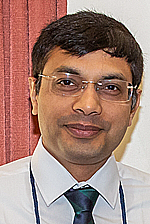
- ARL Senior Fellow
- United States CCDC Army Research Laboratory, Adelphi, MD
Dr. Kumar Vijay Mishra (IEEE S’08-M’15-SM’18) obtained a Ph.D. in electrical engineering and M.S. in mathematics from The University of Iowa in 2015, and M.S. in electrical engineering from Colorado State University in 2012, while working on NASA’s Global Precipitation Mission Ground Validation (GPM-GV) weather radars. Dr. Mishra received his B. Tech. summa cum laude (Gold Medal, Honors) in electronics and communication engineering from the National Institute of Technology, Hamirpur (NITH), India in 2003. Dr. Mishra is currently Senior Fellow at the United States Army Research Laboratory (ARL), Adelphi; Technical Adviser to Singapore-based automotive radar start-up Hertzwell; and honorary Research Fellow at SnT – Interdisciplinary Centre for Security, Reliability and Trust, University of Luxembourg. Dr. Mishra is the recipient of U. S. National Academies Harry Diamond Distinguished Fellowship (2018-2021), Royal Meteorological Society Quarterly Journal Editor’s Prize (2017), Viterbi Postdoctoral Fellowship (2015, 2016), Lady Davis Postdoctoral Fellowship (2017), and DRDO LRDE Scientist of the Year Award (2006). Dr. Mishra is Vice-Chair (2021-present) of the IEEE Synthetic Aperture Standards Committee of the IEEE Signal Processing Society. Since 2020, he has been Associate Editor of IEEE Transactions on Aerospace and Electronic Systems. Dr. Mishra is Vice Chair (2021-2023) and Chair-designate (2023-2026) of International Union of Radio Science (URSI) Commission C. Dr. Mishra is the co-editor of three upcoming books on radar: Signal Processing for Joint Radar-Communications (Wiley-IEEE Press), Next-Generation Cognitive Radar Systems (IET Press), and Advances in Weather Radar Volumes 1, 2 & 3 (IET Press). Dr. Mishra’s research interests include radar systems, signal processing, remote sensing, and electromagnetics.
Presentation: Deep learning Techniques for Hybrid Beamforming in Communications and Radar
Abstract: The millimeter-wave (mm-Wave) massive MIMO communications employ hybrid analog-digital beamforming architectures to reduce the cost-power-size-hardware overheads. Lately, there is also a gradual push to move from the millimeter-wave (mmWave) to Terahertz (THz) frequencies for short-range communications and radar applications to exploit very wide THz bandwidths. The design of the hybrid beamforming techniques requires solving difficult nonconvex optimization problems that involve a common performance metric as a cost function and a number of constraints related to the employed communications/radar regime and the adopted architecture of the hybrid systems. There is no standard methodology for solving such problems and usually, the derivation of an efficient solution is a very challenging task. Since optimization-based approaches suffer from high computational complexity and their performance strongly relies on the perfect channel condition, we introduce deep learning (DL) techniques that provide robust performance while designing a hybrid beamformer. These methods offer advantages such as low computational complexity and the ability to extrapolate new features from a limited set of features contained in a training set. In this talk, the audience will learn about applying DL to various aspects of hybrid beamforming including channel estimation, antenna selection, wideband beamforming, knowledge transfer across various geometries, and spatial modulation in both communications and radar.
IEEE Engineering in Medicine and Biology Society and the
Denver Computer, Information Theory, and Robotics Society
– Technical Meeting
05 January 2022 @ 12:00 PM – 1:00 PM MT
Dr. Hermano Igo Krebs

- Principal Research Scientist and Lecturer, Mechanical Engineering Department, MIT
- Fellow of IEEE
Dr. Hermano Igo Krebs is a Principal Research Scientist and Lecturer at MIT’s Mechanical Engineering Department and the Director of The77Lab (http://the77lab.mit.edu). Dr. Krebs holds an affiliate position as an Adjunct Professor at University of Maryland School of Medicine, Department of Neurology, and as a Visiting Professor at Fujita Health University, Department of Physical Medicine and Rehabilitation (Japan), at Osaka University, Mechanical Science and Bioengineering Department (Japan), and at Loughborough University, Rehabilitation Robotics of The Wolfson School of Mechanical, Electrical, and Manufacturing Engineering (UK). Dr. Krebs is a Fellow of the IEEE and was nominated to this distinguished engineering status “for contributions to rehabilitation robotics and the understanding of neuro-rehabilitation”. Dr. Krebs received “The 2009 Isabelle and Leonard H. Goldenson Technology and Rehabilitation Award” from the Cerebral Palsy International Research Foundation (CPIRF), the 2015 IEEE-INABA Technical Award for Innovation leading to Production “for contributions to medical technology innovation and translation into commercial applications for Rehabilitation Robotics”, and he was selected as a 2021 IEEE-EMBS Distinguished Lecturer (2021/2022). Dr. Krebs was one of the founders, member of the Board of Directors, and the Chairman of the Board of Directors of Interactive Motion Technologies from 1998 to 2016. Dr. Krebs successfully sold it to Bionik Laboratories, a publicly traded company, where he served as its Chief Science Officer and as a member of the Board of Directors until July 2017. Dr. Krebs later founded 4Motion Robotics.
Presentation: How Robotics are Revolutionizing Rehabilitation
Abstract: Capitalizing on the new understanding of brain plasticity, we introduced a paradigm shift in clinical practice in 1989 when we initiated the development of the MIT-Manus robot for neuro-rehabilitation and deployed it into the clinic. Since then we collected evidence to support the potential of enhancing and augmenting recovery following a stroke, first during the sub- acute and then the chronic phase. Our efforts and that of others led to the endorsements starting in 2010 from the American Heart Association, the American Stroke Association, and the Veterans Administration for the use of rehabilitation robots for the Upper Extremity, but not yet for the Lower Extremity. AHA recommendations were the same in the 2016 revision. Furthermore, it was demonstrated in the VA system that upper extremity robotic therapy has an economic advantage over manual therapy. More recently we completed a pragmatic study RATULS under the auspices of the National Health Service of the United Kingdom and its NIHR Health Technology Assessment Programme, which enrolled 770 stroke patients. Thus, we have developed novel robotic treatment and evaluation tools and have managed to collect the experimental evidence that demonstrates the unequivocal therapeutic benefits stemming from robot-aided rehabilitation for the upper extremity as well as present shortcomings. This talk will present an overview of our past rehabilitation robotics efforts and more recent efforts addressing the identified shortcomings.