IEEE Denver Computer, Information Theory and Robotics Society & Computational Intelligence Society – Technical Meeting
Nov 15, 2023, 6:00 PM – 7:00 PM (MDT)
Caleb Escobedo
Caleb Escobedo is a fifth year Computer Science PhD student at the University of Colorado Boulder. Mr. Escobedo’s research focuses on novel close-proximity (< 15cm) sensor development and sensor integration with dynamic robot arm movement. Mr. Escobedo spent the last year working at the Samsung Artificial Intelligence Center – New York on the Novel Sensors Team, advised by Daewon Lee and Volkan Isler. Within Samsung, Mr. Escobedo published three papers about using piezoelectric–based sensors to detect close–proximity and contact with nearby objects at the International Conference on Robotics and Automation (ICRA) and the International Conference on Intelligent Robots and Systems (IROS) 2023 and is preparing for additional submissions at ICRA 2024. Mr. Escobedo is member of the Human Interaction and Robotics (HIRO) group at the University of Colorado Boulder, headed by Alessandro Roncone, where he leads the HIRO Robotic Skin Project in development of software and hardware required for full-surface robot close–proximity and contact detection. Mr. Escobedo has developed several software stacks integrating real–time redundant robot manipulator inverse kinematics with data from custom sensors placed on the robot surface, and his recent publications with the HIRO group include a IROS 2023 acceptance on trajectory planning with contact in cluttered environments, and a submission to ICRA 2024 introducing custom hardware for tactile sensing. While in New York, NY. Mr. Escobedo was the lead student organizer for the Robotics: Science and Systems (RSS) 2022 workshop titled Close–Proximity Human–Robot Collaboration: Challenges and Opportunities hosted at Columbia University.
Presentation: Robot Arm Collision Avoidance and Onboard Sensors
Abstract: Sensors are required to detect obstacles near a robot manipulator. While depth cameras are the most common scene perception technology, we look at alternatives that give information originating from the robot body itself (on-board sensors). For robots to be physically located within human–laden environments, advances are needed in both control and sensing technology. We will look at formulations and execution of real-time control methods for robot manipulator collision avoidance around dynamic objects and how to perceive objects in real-time.
IEEE Denver Computer, Information Theory & Robotics Society, Computational Intelligence Society, Engineering in Medicine & Biology Society, Life Member Affinity Group – Technical Meeting
Sep 20, 2023, 6:00 PM – 7:00 PM (MDT)
Dr. Jeremy Slater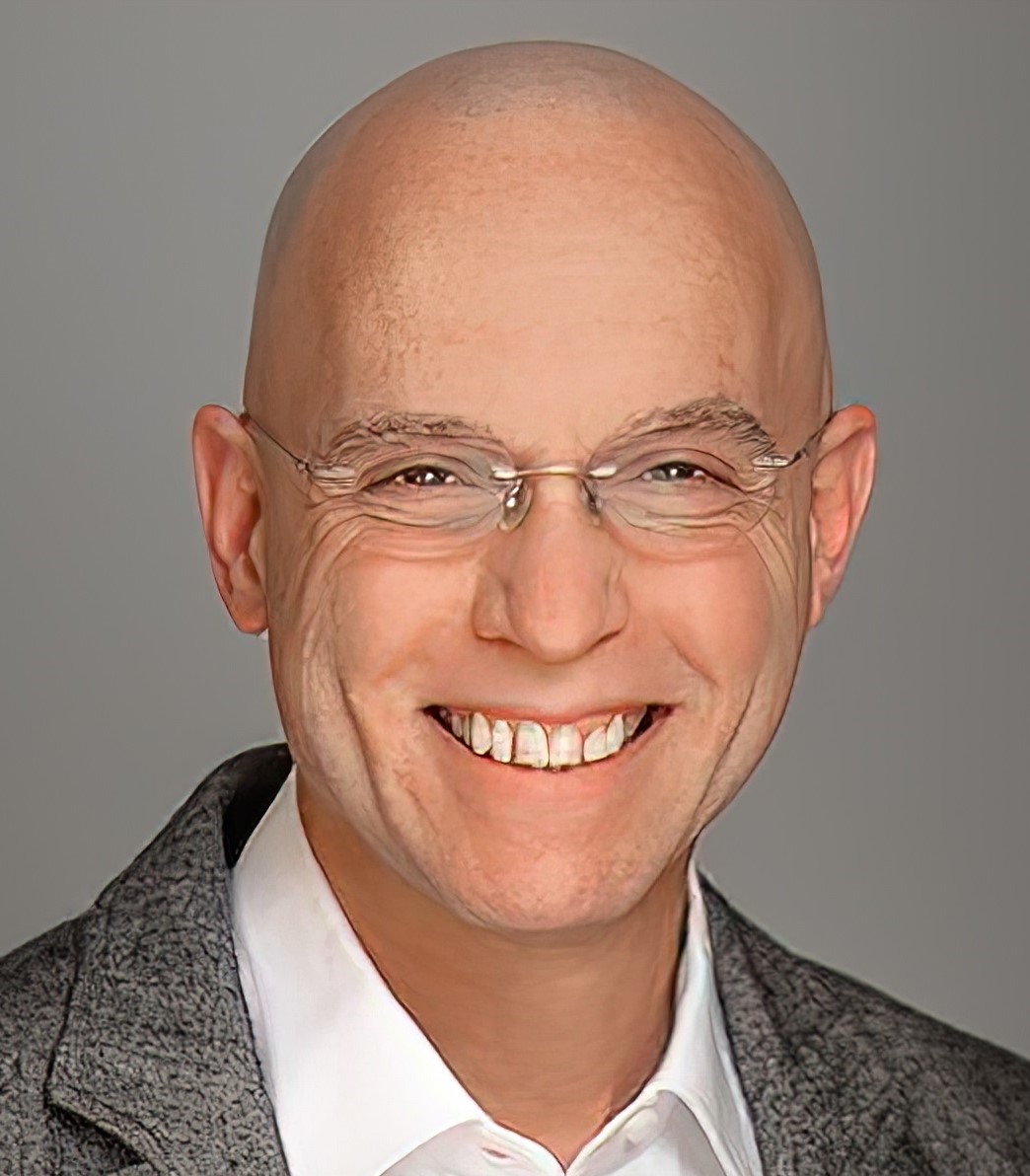
- Fellow of the American Academy of Neurology, the American Epilepsy Society, and the American Clinical Neurophysiology
- Stratus Chief Medical Officer
- Doctor of Medicine
Dr. Slater holds a Bachelor of Science in Molecular Biophysics and Biochemistry from Yale University, and Doctor of Medicine from the University of Pittsburgh School of Medicine. Dr. Slater completed his postgraduate training in Internal Medicine, Neurology, and Epilepsy, where he assumed the role of Chief Resident of Neurology at the University of Miami School of Medicine. Dr. Slater has held academic appointments at institutions such as the University of Miami School of Medicine, University of North Dakota School of Medicine, and The University of Texas Medical School at Houston, including various directorial and administrative roles across various hospitals and medical institutions, impacting areas from Epilepsy Monitoring to Clinical Neurophysiology. Dr. Slater served as the Director of the Texas Comprehensive Epilepsy Program from 2005 through 2018 and currently serves as the Chief Medical Officer at Stratus, a role he has held since 2018. Dr. Slater is board certified by the American Board of Psychiatry and Neurology and the American Board of Clinical Neurophysiology and has been recognized as a Fellow of the American Academy of Neurology, the American Epilepsy Society, and the American Clinical Neurophysiology Society. Dr. Slater has published numerous articles in peer-reviewed journals and given many invited lectures at national and international symposiums, served as an investigator for numerous clinical trials of novel anticonvulsants and medical devices. Dr. Slater’s early research work focused on the potential for applying techniques of the developing field of artificial neural networks to classification problems in clinical neurophysiology. More recent research has focused on changes to brain electrical activity related to drowsiness and exploring differing deep learning architectures for classification of EEG signal abnormalities.
Presentation: EEG, Machine Learning, and Artificial Intelligence – Applications and Progress
Abstract: This talk will explore the intersection of artificial intelligence (AI) and electroencephalography (EEG). The first fundamental question discussed will be why we require the assistance of machines despite existing human capabilities. This will be followed by a necessarily incomplete historical narrative on the application of AI to EEG, looking at the impact of advances in software and hardware on the clinical care of patients. This will lead into a discussion of the pitfalls and obstacles that prevent or slow the adoption of AI for EEG analysis. The talk will conclude with speculation about future developments and their potential impact on clinical care.
IEEE Denver Computer, Information Theory, and Robotics Society & Computational Intelligence Society – Technical Meeting
May 17, 2023, 6:00 PM – 7:00 PM (MDT)
Dr. Zhao Han 
- Denver IEEE Computer Society Guest Lecturer
- Postdoctoral Research Fellow, Colorado School of Mines
Dr. Han holds a Ph.D. in Computer Science from UMass Lowell in the HRI Lab, directed by AAAI Fellow Dr. Holly Yanco. Previously, he spent time in Canada and received his M.S. (advised by Dr. Carson Leung in the Database and Data Mining Lab) and B.S. degrees in Computer Science from the University of Manitoba. Dr Han is currently a Post-Doctoral Fellow at Colorado School of Mines and will start as an Assistant Professor in the Computer Science and Engineering department at the University of South Florida in August 2023. Dr. Han received the best long-paper award at INLG 2022 and the best late-breaking report third prize at HRI 2022. Previously, he had led teams to win multiple robot competitions, including first place in the Panasonic Prototype 3D LiDAR Challenge and second place in the FetchIt Mobile Manipulation Challenge at ICRA 2019. In addition to research, he received a university-wide Mines Diversity, Inclusion, and Access (DI&A) Award in 2022.
Presentation: Bridging The Gap Between Robots and Humans Through Explainability
Abstract: Robots are traditionally placed behind fences for autonomous pick-and-place tasks. Today, we are witnessing robots moving to work with humans. They will not only need to manipulate but also hand objects to people and explain when autonomy fails. In this talk, I will start with how I tackled challenges in mobile manipulation tasks in a collaborative environment and a better way to let objects go for fluent human-robot handovers. Then I will focus on high-level hierarchical explanation generation algorithms using behavior trees and finer-level references for preferred concise explanations. This includes reference production through a cognitive status-informed approach and mixed-reality robot behavior replays to reason about objects no longer present. Finally, I will discuss how augmented reality can enable physically limited robots to gesture.
IEEE Denver Computer, Information Theory, and Robotics Society & Computational Intelligence Society – Technical Meeting
April 19, 2023, 6:00 PM – 8:00 PM (MDT)
Dr. Dongcheng He 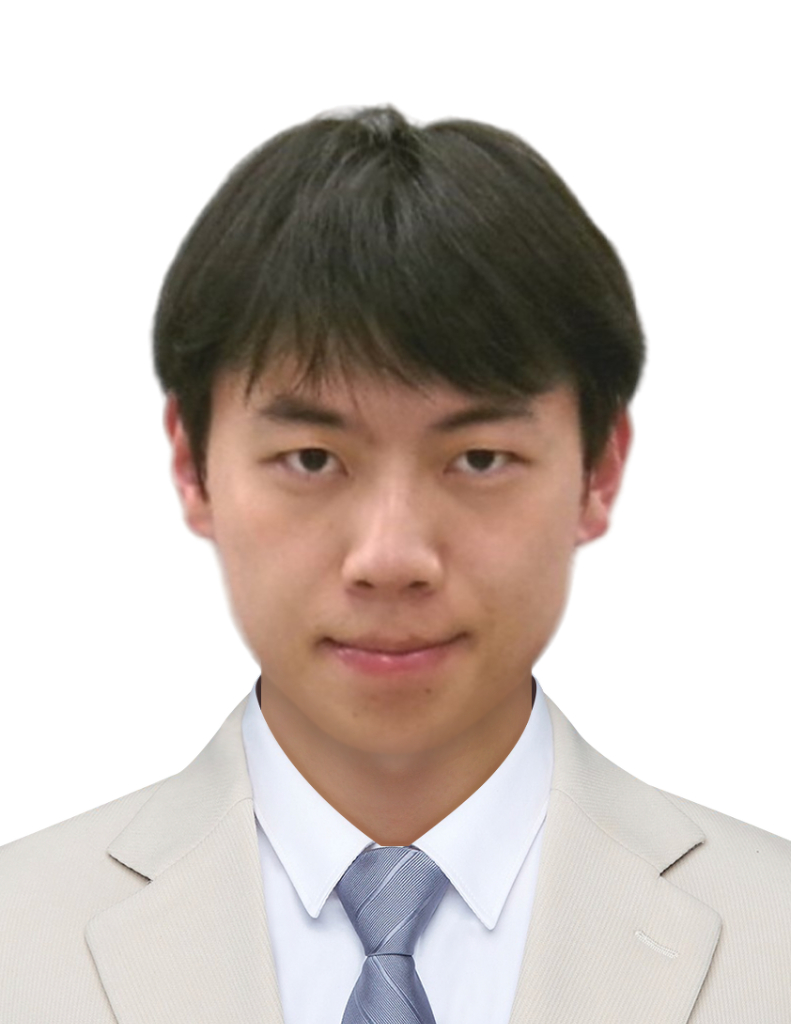
- Denver IEEE Computer Society Guest Lecturer
- Postdoctoral Research Fellow, School of Optometry, University of California, Berkeley
Dr. Dongcheng He is currently a Postdoctoral Research Fellow in the School of Optometry and Vision Science, University of California, Berkeley. Dr. He performed internships at the National University of Singapore and Wuhan National Laboratory for Optoelectronics (China), respectively, while studying for his B.Eng. degree in Telecommunications Engineering from Huazhong University of Science and Technology, China, which he received in 2017. Dr. He has worked at the University of Denver as a Graduate Research/Service Assistant for five years, receiving his Ph.D. degree in Electrical and Computer Engineering in 2023. Dr. He has worked in the field of cognitive and computational neuroscience as well as having conducted interdisciplinary research. Dr. He’s doctoral work investigated reverse-engineering of the brain and focused on how the brain uses reference frames in processing visual information, in storing it in memory, and in guiding goal-directed action. In his postdoctoral research, he studies cortical adaptation due to vision loss using psychophysical methods and neuroimaging techniques. Dr. He’s research interests include brain-inspired algorithms for machine learning, reference frames in human perception, computational neural models for visual processing, and neuroimaging technology such as EEG and fNIRS.
Presentation: A Neural Model for Relative-Motion Perception
Abstract: Our visual system uses a variety of reference frames. Beginning from the retinas, through the optics of the eye, images of neighboring points in the environment are mapped onto neighboring photoreceptors in the retina. The resulting retinal stimulus representations are called retinotopic maps. However, the perception of motion doesn’t only depend on the retinotopic reference-frame, but also on choosing and applying non-retinotopic reference-frames based on the motion signals to be interpreted. In this study, we propose a neural model that implements the common-fate principle for non-retinotopic reference- frame selection. The first layer of the model extracts retinotopic motion signals. Through synaptic projections, the next layer computes the common-motion vector, which is then used as a reference-frame. Based on the determined non-retinotopic reference-frame, later layers compute the relative motion of each visual element. This talk will discuss the neural structures, electrical-circuit abstracts for neural behaviors, and mathematical descriptions used in this project. It will also show the simulation results of this model with multiple classical relative motion stimuli, including the three-dot, rotating-wheel, and point-walker paradigms. Finally, the performance of this model will be compared with the results of our psychophysical experiments and previously proposed models.
IEEE Denver Computer, Information Theory, and Robotics Society – Technical Meeting
March 15, 2023 6:00 PM – 7:30 PM
Dr. Derek Wise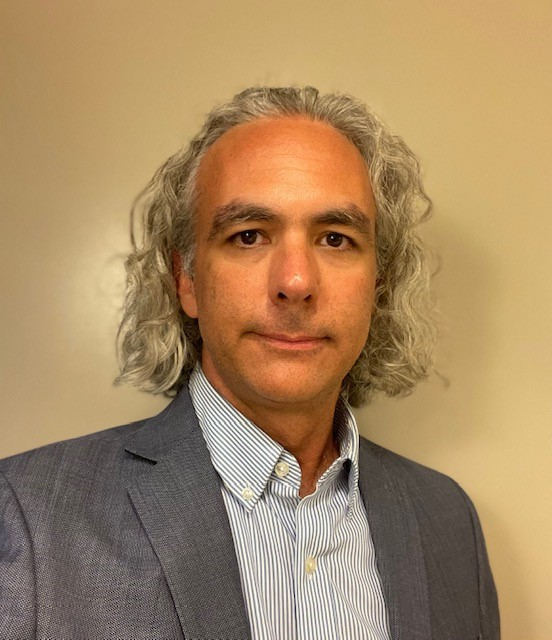
- Denver IEEE Computer Society Guest Lecturer
- Research Engineer: Autonomy/AI and Quantum Technologies, Lockheed Martin
Dr. Derek Wise is a Senior Staff AI Research Engineer at Lockheed Martin. His main current areas of focus include quantum technologies, artificial intelligence and autonomy. Dr. Wise has a background in fundamental physics, especially particle physics and classical and quantum gravity, geometry and applied category theory. He has also worked on a range of other problems in the mathematical sciences, such as computer vision, natural language processing, game theory, radiation effects on electronics, environmental science, astrodynamics, and navigation. Dr. Wise holds a Ph.D. in Mathematics from the University of California, Riverside. He has been a mathematics professor at Concordia University, St Paul, and held postdoctoral research positions at the University of California, Davis, and at the Mathematics Institute and the Institute for Quantum Gravity at the University of Erlangen (Germany).
Presentation: Categories for Knowledge Representation
Abstract: Rigorous knowledge representation is essential to modeling engineered systems, ensuring interoperability and extensibility, and to the design of systems with artificial intelligence capable of processing knowledge autonomously or in collaboration with humans. Human knowledge is often centered around binary relationships, which explains why directed graphs, and graph databases built on them, are frequently used for knowledge capture. However, knowledge is also compositional, in that relationships can be composed to form new relationships. In this context, I will review categories as a generalization of graphs, as a foundation for knowledge engineering, leading up to recent work on using higher category theory to capture two dimensions of relationships: both relationships between individual entities and relationships between the types of those entities and relationships.
IEEE Denver Computer, Information Theory, and Robotics Society – Technical Meeting
February 15, 2023 7:00 PM – 8:00 PM (MST)
Eric Ericson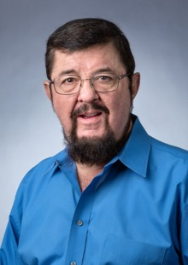
- Denver IEEE Computer Society Guest Lecturer
- IEEE Senior Member
- Lockheed Martin Fellow
Eric Ericson is a Lockheed Martin Fellow who shares more than 30 years of technical innovation and leadership in emerging technology projects. He currently leads the AI for Product Engineering and Program Management project at Lockheed Martin. Mr. Ericson’s experience includes senior technical leadership positions in multiple world class aerospace and telecommunications companies. He was Principal Architect at Level(3) Communications ($15 billion), Vice President of Technology at Telcove Communications ($1.3 billion) , Pre-merger Advisor for Cingular Telecommunications acquisition of AT&T Wireless ($40 billion), and Principal Architect reporting to the CIO of Qwest Communications ($43 billion). In addition to a patent for an expert approach to Systems and Methods for Managing Business Processes in an Enterprise, Mr. Ericson is the holder of multiple aerospace-related trade secrets. He was lead author and editor of Expert Systems for Integrated Network Management and presenter at multiple industry-leading symposiums. Mr. Ericson holds a Bachelor of Arts degree from the University of Colorado (Boulder) and a Master of Science degree from the University of Southern California. He was an Adjunct Professor in the Computer Information Systems programs at the University of Denver and the University of Phoenix. He currently serves as a senior capstone advisor at Virginia Tech and is an invited reviewer for Carnegie Mellon University School of Engineering projects. Mr. Ericson is an active member of the community, serving as the leader of an outdoor adventure program for boys and young men and is the IEEE Denver Section, Chapter Chairman for the Computer, Information Theory, and Robotics Societies. Mr. Ericson is an IEEE Senior Member.
Presentation: Using Agile Concepts In Dynamic Software Development
Abstract: Developing software capabilities in dynamic environments such as emerging technologies and research requires sufficient rigor to reach the long term vision and must accommodate new information and roadblocks discovered in the development process. While recent commercial agile processes and tools have tended towards the baroque, and may not be appropriate in dynamic environments, the Agile Manifesto and core techniques present a good balance between rigor and flexibility. This presentation will review practical Agile concepts and provide useful tips from 20+ years of software development ranging from three-person tiger teams to multi-team emerging technology programs.