IEEE Denver Computer, Information Theory & Robotics Society, Computational Intelligence Society – Technical Meeting
November 20, 2024, 6:00 PM – 7:30 PM (MDT)
Virginia Koday

- M.S. in Cybersecurity
- Cyber Systems Security Engineer in the Advanced Technical Leadership Program at Lockheed Martin
Virginia Koday obtained a B.A. in Sociology from University of Phoenix in 2014, a B.A. in Information and Computer Sciences from the University of Hawaii in 2018, and an M.S. in Cybersecurity from the University of Denver in 2020. Ms. Koday works at Lockheed Martin, where she conducts cyber assessments on developing technologies to implement cybersecurity into the engineering process. She is also leading the development of Lockheed Martin’s Cyber Test and Evaluation Guidelines, making a unified approach on cybersecurity practices for the entire company. Having served in the military for 9 years, Ms. Koday volunteers at a local veteran’s group V.E.T. aimed at providing veterans the means and community to get outdoors. She also volunteers at various Cybersecurity and Capture-The-Flag events. Ms. Koday has received awards on her technological expertise including penetration test competitions, and is in Lockheed Martin’s Advanced Technical Leadership Program.
Presentation: Cybersecurity Engineering: Building robust architecture in a cyber-contested world
Abstract: Recent news has published information on technology and infrastructure at risk for being compromised due to cyber-attacks. There are several instances in which these attacks have been successful and have resulted in great consequences. Integrating Cybersecurity into the engineering process will enable designs to be resilient against attacks and ensure that the technology can operate in an increasingly hostile environment. This presentation will share examples of these attacks, how to identify vulnerabilities in designs, and a process that engineers can integrate into their development cycle to include cybersecurity into their architecture.
IEEE Denver Computer, Information Theory & Robotics Society, Computational Intelligence Society & University of Colorado Denver – Technical Meeting
November 15, 2024, 11:00 AM – 12:00 PM (MDT)
Claudio Gallo
- Senior Security Analyst
- IEEE Member
Claudio Gallo is currently pursuing a BS in Informatics Engineering at Universidad Internacional de Valencia. With over four years of experience in cybersecurity, Claudio serves as a Senior Security Analyst at Connect for Health Colorado, where he focuses on safeguarding healthcare and insurance systems. His work includes protecting sensitive data, managing vulnerabilities, and ensuring compliance with industry regulations to support the secure delivery of healthcare services. Claudio’s research centers on the unique cybersecurity challenges in healthcare, such as protecting customer data from phishing attacks and ransomware, securing online health platforms, and mitigating risks associated with third-party vendors. By analyzing real-world healthcare breaches, he develops targeted strategies to enhance system resilience, improve customer safety, and ensure the continuity of critical healthcare operations.
Presentation: Navigating the role of Cybersecurity in Engineering and Healthcare
Abstract: Breaking into the cybersecurity field can be challenging, but with the right strategies, it’s possible to navigate a successful entry. This talk will draw on my experience as a Senior Security Analyst and explore key aspects of cybersecurity careers, including vulnerability management, incident response, and compliance. I’ll share insights into transitioning into the field, the diverse roles I’ve undertaken, and the lessons learned from those experiences. The discussion will also focus on the essential skills required to excel in cybersecurity and the everyday challenges professionals face. Ultimately, this talk aims to provide practical guidance for building a rewarding career in cybersecurity, regardless of where you’re starting.
IEEE Denver Computer, Information Theory & Robotics Society, Computational Intelligence Society, and Colorado School of Mines – Joint Technical Meeting (triple event).
November 14, 2024, 4:00 PM – 6:00 PM (MDT)
Yifei (Rena) Zhu

- Colorado School of Mines
- PhD Student Robotics Engineering
Rena is a third-year PhD student in Robotics in the Mines Interactive Robotics Research Lab at the Colorado School of Mines. Rena is interested in exploring human-centered design paradigms within Mixed/Augmented Reality and Human-robot interaction (HRI), and understanding what role MR/AR technology can, and should, play in HRI through an interdisciplinary lens. Moreover, Rena is interested in technology ethics, AI ethics, and technology policy, and wants to explore how research efforts may impact society at large.
Presentation: Understanding Multi-modal communication in Multi-task context.
Abstract: Multiple Resource Theory suggests that the mind has largely distinct types of cognitive resources associated with different sensory modalities, with subdivisions along a number of other dimensions. In this work we explore how the modality of communication used by task guidance systems meant to assist in multi-task contexts interacts with the modality of underlying tasks to determine overall cognitive load and task performance. Our results suggest that users can strategically avoid overload by selectively attending to dimensions of multi-modal communication.
Abolfazl Babanazari
- Colorado School of Mines
- PhD Student Computer Science
Abolfazl is a graduate student currently pursuing a PhD in Computer Science at the Colorado School of Mines under supervision of Kaveh Fathian. Abolfazl has prior experience working in the medical field on stereo systems and developing AR systems for surgical navigation. Abolfazl’s research interests include Linear Algebra, Graph Theory, and Optimization, particularly in their applications to Robotics and Autonomy, such as Simultaneous Localization and Mapping (SLAM) and perception. Abolfazl is currently focusing on robust data association techniques from both a theoretical and practical aspect.
Presentation: Global Point Cloud Registration in Structured Scenes.
Abstract: Point cloud registration, especially without an initial transformation, is crucial for many tasks in robotics and computer vision. When the corresponding parts of two point clouds are unknown, the solution search space grows exponentially with the size of the point clouds. A widely used approach to address this issue involves leveraging local surface properties around given points and matching these to corresponding points across point clouds. While effective, this technique struggles in environments with repetitive patterns, such as man-made structures, urban areas, or indoor settings, where point-based matching methods can generate associations with an extremely high outlier ratio. In this presentation, we explore the potential of using primitive mathematical shapes and the possibility of integrating them into existing Global Point-Based Registration (GPBR) algorithms. By reducing the number of associations and outlier ratio, this technique can significantly improve the accuracy and robustness of point cloud registration.
Tanmay Desai

- Colorado School of Mines
- PhD Student Robotics Engineering
Tanmay is a second-year PhD student in Robotics advised by Dr. Iris Bahar at the Colorado School of Mines. Tanmay is interested in exploring better motion planning algorithms and how can we utilize hardware accelerators specifically Field Programmable Gate Arrays (FPGAs) to get power efficient and faster convergence to controls in stochastic environments.
Navigating the Energy Frontier: Efficient Motion Planning for Mobile Robots.
Abstract: Mobile robots often struggle with the computational demands of sampling-based motion planning algorithms. This research explores the potential of FPGAs as a more energy-efficient alternative to GPUs. By leveraging their parallel architecture and hardware-specific optimizations, FPGAs could significantly improve the performance-per-watt ratio of motion planning systems.
IEEE Denver Computer, Information Theory & Robotics Society, Computational Intelligence Society, Engineering in Medicine & Biology Society – Technical Meeting
November 13, 2024, 5:30 PM – 6:30 PM (MDT)
Dr. Omer Inan

- Regents Entrepreneur
- Chair in Bioscience and Bioengineering
- Professor of Biomedical Engineering
Dr. Omer Inan received his BS, MS, and PhD in Electrical Engineering from Stanford in 2004, 2005, and 2009, respectively. Dr. Inan is Regents Entrepreneur, Professor and Linda J. and Mark C. Smith Chair in Bioscience and Bioengineering in the School of Electrical and Computer Engineering, and Adjunct Professor in the Coulter Department of Biomedical Engineering, at Georgia Tech. From 2009-2013, Omar was the Chief Engineer at Countryman Associates, Inc., a professional audio manufacturer of miniature microphones and high-end audio products for Broadway theaters, theme parks, and broadcast networks. Dr. Inan’s research focuses on non-invasive physiological sensing and modulation for human health and performance. Dr. Inan has published more than 380 technical articles in peer-reviewed international journals and conferences, has 18 issued patents, received several major awards for his research.
Dr Inan is also Fellow of the IEEE, the American Institute for Medical and Biological Engineering (AIMBE), and the American College of Cardiology. He is currently an IEEE Engineering in Medicine and Biology Society Distinguished Lecturer.
Presentation: Wearable Sensing For Health And Performance.
Abstract: Recent advances in digital health technologies are enabling biomedical researchers to reframe health optimization and disease treatment in a patient-specific, personalized manner. This talk will focus on my group’s research in two areas of relevance to digital health: (1) cardiogenic vibration sensing and analytics; and (2) musculoskeletal sensing with joint acoustic emissions and bioimpedance. Our group has extensively studied the timings and characteristics of cardiogenic vibration signals such as the ballistocardiogram and seismocardiogram, and applied these signals for quantifying filling pressures and volume status in the context of heart failure (volume overload) and hemorrhage (volume depletion). We envision that these technologies can all contribute to improving patient care with lower cost and better outcomes.
IEEE Denver Computer, Information Theory & Robotics Society, Computational Intelligence Society – Technical Meeting
October 23, 2024, 6:00 PM – 7:30 PM (MDT)
Claudio Gallo
- Senior Security Analyst
- IEEE Member
Claudio Gallo is currently pursuing a BS in Informatics Engineering at Universidad Internacional de Valencia. With over four years of experience in cybersecurity, Claudio serves as a Senior Security Analyst at Connect for Health Colorado, where he focuses on safeguarding healthcare and insurance systems. His work includes protecting sensitive data, managing vulnerabilities, and ensuring compliance with industry regulations to support the secure delivery of healthcare services. Claudio’s research centers on the unique cybersecurity challenges in healthcare, such as protecting customer data from phishing attacks and ransomware, securing online health platforms, and mitigating risks associated with third-party vendors. By analyzing real-world healthcare breaches, he develops targeted strategies to enhance system resilience, improve customer safety, and ensure the continuity of critical healthcare operations.
Presentation: Engineering the Future: The Essential Role of Cybersecurity in Safeguarding Innovation
Abstract: As engineering systems become increasingly interconnected and reliant on digital technologies, cybersecurity is emerging as a critical concern across various fields. This presentation explores the role of cybersecurity in safeguarding innovations in industrial control systems, IoT devices, biomedical systems, and critical infrastructure. Key topics include the vulnerabilities associated with SCADA systems, the risks posed by poorly secured IoT networks, and the challenges of protecting connected medical devices. Real-world case studies, such as the Stuxnet worm, Mirai botnet, and WannaCry ransomware attacks, illustrate the devastating consequences of cyberattacks on essential systems. The presentation also covers best practices for engineers, such as secure coding and security-by-design principles, and highlights emerging trends like AI-driven cybersecurity and quantum encryption. Emphasizing the engineer’s responsibility in integrating security at every stage of development, this talk provides actionable insights for building resilient, future-proof systems.
IEEE Denver Computer, Information Theory & Robotics Society, Computational Intelligence Society – Technical Meeting
October 16, 2024, 6:00 PM – 7:30 PM (MDT)
Dr. Steven Murphy

- PhD Electrical Engineering and Numerical Analysis
- Lockheed Martin Fellow Engineer
Dr. Murphy holds a PhD and a BS in Electrical Engineering, with a minor in numerical analysis, from the University of Minnesota, Twin Cities. Dr Murphy completed his masters in Electrical Engineering at Johns Hopkins while serving as a US Naval officer and doing ASIC design. Dr Murphy has worked for one company that has gone through many acquisitions through companies such as Sperry, Unisys, Paramax, Loral and Lockheed Martin. Dr Murphy has conducted research in parallel processing and holds 11 patents related to that research. Dr Murthy is currently a Lockheed Martin Fellow engineer and designs custom high-performance computers for signal processing and performs technical oversight on numerous projects across the corporation. Dr. Murphy is an expert in digital/analog circuit design, signal integrity and electromagnetic interference.
Presentation: How to Design a Product that Actually Works
Abstract: Many electronic products just don’t work very well. The products are full of both hardware and software bugs and often fail right out of the box or within a few weeks. Then the product joins millions of other pieces of junk in the landfill. Learn how to put in just a small amount of extra effort that makes the difference between a product that is junk and a product that is useful, manufacturable, and profitable. From getting the requirements correct, to passing electromagnetic interference tests that every product is required to pass by the FCC, to being able to build thousands or millions in the factory, there are pitfalls easily avoided every step of the way. Join Dr. Steve Murphy and the IEEE CIR for a discussion on the planning, design, and improvement involved with the designing of a “Good Electronic Product”.
IEEE Denver Computer, Information Theory & Robotics Society, Computational Intelligence Society – Technical Meeting
September 18, 2024, 6:00 PM – 7:30 PM (MDT)
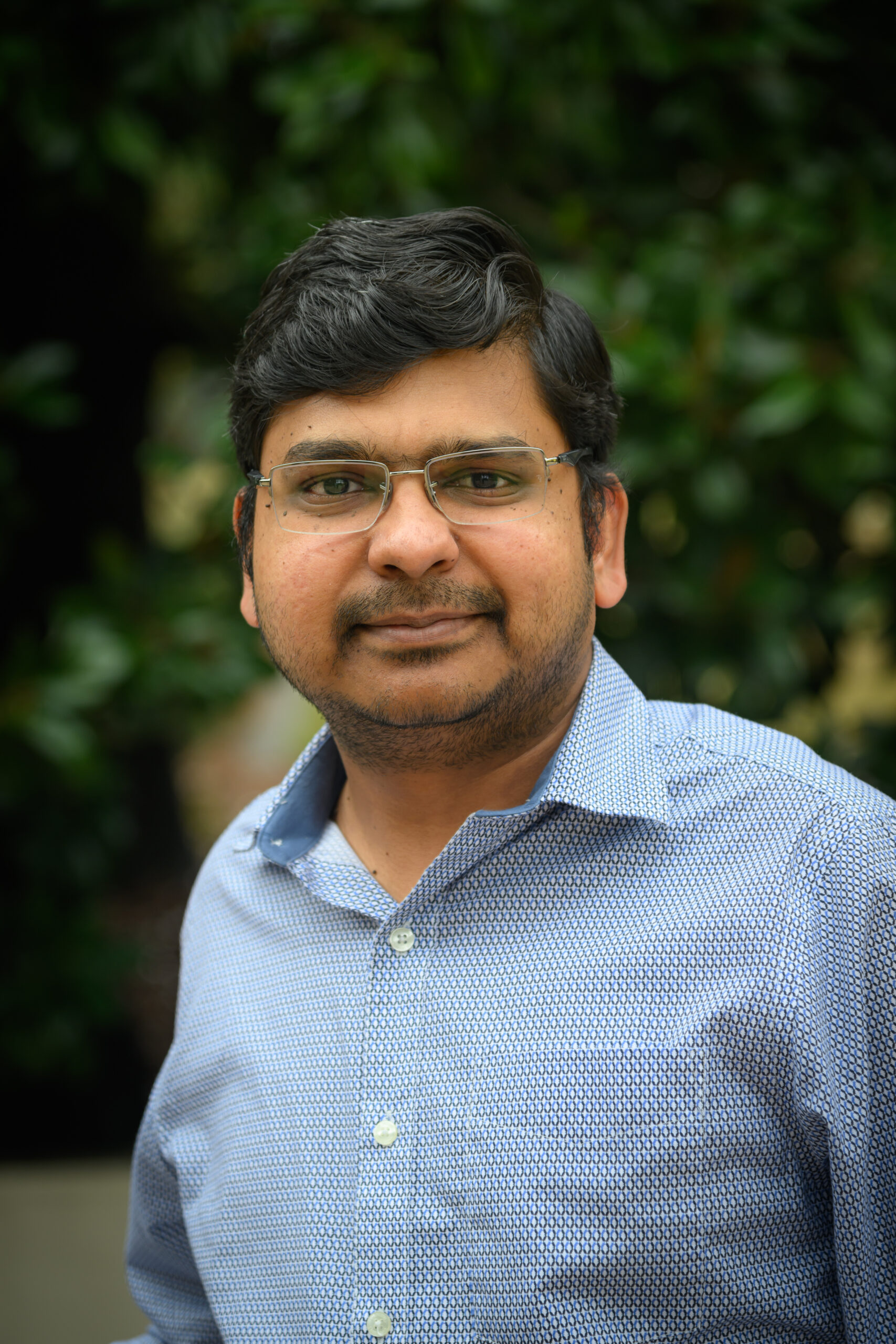
Prof. Ramviyas Parasuraman
- PhD Robotics and Automation
- Assistant Professor at the University of Georgia
- Senior Members, IEEE
Dr Ramviyas Nattanmai Parasuraman achieved his Ph.D. (Robotics and Automation) from Universidad Politecnica de Madrid, Spain. Dr Parasuraman conducted his doctoral research at CERN (European Organization for Nuclear Research), Switzerland, and obtained his Dr. Parasuraman is a recipient of the prestigious Marie Sklodowska Curie ESR Fellowship. Dr Parasuraman had held postdoctoral appointments at Purdue University, USA, and KTH Royal Institute of Technology, Sweden. Currently, Dr Parasuraman is an Assistant Professor in the School of Computing at the University of Georgia, where he directs the Heterogeneous Robotics Research Lab. Within the University of Georgia Dr Parasuraman conducts cutting-edge research in heterogeneous robotics and multi-robot systems, collective swarm intelligence, rescue robotics, and human–robot interfaces. Dr Parasuraman’s work has appeared in well-known publication venues in Robotics, such as IROS, T-RO, RA-L, MRS, DARS, etc.
Presentation: Relative Localization in Multi-Robot and Wireless Networked Systems
Abstract: Dr Parasuraman will present his recent work in the research of relative localization in mobile robots and sensors, where the robots collaborate their measurements and apply Bayesian sampling and graph-theoretic approaches to perform relative localization and exploration in a distributed manner. The novelty of these approaches lies in their ubiquity of relying only on minimal sensor data, making them applicable to SWAP-constrained devices like IoT nodes and swarm robots. Dr Parasuraman will also present some extensions of these works to an autonomous multi-robot exploration domain by presenting a distributed earning technique using ad-hoc map merging and significantly reducing communication and computation costs.
IEEE Denver Computer, Information Theory & Robotics Society, Computational Intelligence Society – Technical Meeting
May 15, 2024, 6:00 PM – 7:30 PM (MDT)
Dr Tod Schuck

- Ph.D. in Systems Engineering
- LM Fellow: RMS specializing in missile defense combat systems, Lockheed Martin
- Lecturer in the Whiting School of Engineering and Applied Science at Johns Hopkins University
Dr. Tod M. Schuck received a BS. in electrical engineering from Georgia Tech in 1989, an MS. in electrical engineering from Florida Tech in 1994, and a PhD in systems engineering from Stevens Institute of Technology in 2010, concentrating in knowledge representation in distributed, network-centric systems. Dr. Schuck works for Lockheed Martin, specializing in information and knowledge fusion and complex systems architecture and design. Additionally, Dr. Schuck is an adjunct professor at Johns Hopkins University, Whiting School of Engineering and Applied Science, Programs for Professionals and at Rowan University where he teaches Command and Control and Systems Engineering for the Henry M. Rowan College of Engineering – Electrical & Computer Engineering. Dr Schuck has published over 50 papers, book chapters, and conference proceedings. Dr Schuck also holds two US patents, several trade secrets, and has two recent patent applications submitted to the US. Patent Trade Office.
Presentation: Phenomenology Based Missile Classification using Radar Micro-Doppler Processing
Abstract: This presentation will communicate new methods to measure the physical dimensions of structures of rotating objects observed by radar systems. Using a pure CW waveform, it is possible to dimension structures that are rotating in the Doppler dimension by exploiting Micro-doppler cyclic signal processing methods that allow for the replacement of absolute time with the relative periodicity of a rigid body rotating structure across a fixed axis. The formulaic breakdown is given to determine a rotating object’s rotation rate, main body diameter, fin/stabilizer lengths, and the number of fins/scatterers on a rigid body with high precision that is not dependent on the range resolution of the radar. An example that shows dimension determination using live data from an artillery round and a terrier-sounding rocket will be provided and discussed.
IEEE Denver Computer, Information Theory & Robotics Society, Computational Intelligence Society – Technical Meeting
April 17, 2024, 6:00 PM – 7:30 PM (MDT)
Benjamin Dossett

- University of Denver MS Student in Computer Science
- IEEE Student Member
Mr. Benjamin Dossett is currently pursuing a master’s in computer science at the University of Denver. Mr Dosset holds a BS in Computer Science from the University of Denver. Mr Dosset’s research investigates how humans perceive robots, approaching the topic using a multidisciplinary approach. One aspect of Ben’s research involves the creation of a novel robot design tool to understand the effects of robot design. The second aspect investigates the creation of effective interfaces for human-robot teaming. In conducting his graduate student research. Additionally, Ben has led development and experimentation efforts on several collaborative research projects, resulting in multiple publications at venues such as IEEE RO-MAN, ACM Transactions on Human-Robot Interaction, and ACM/IEEE Human-Robot Interaction.
Presentation: Bridging Design and Perception: Novel Tools and Technologies for Creating Effective Human-Robot Interactions
Abstract: Understanding human perception of robots is crucial for effective human-robot interaction, particularly as robots move into more collaborative roles with humans. Gaining an understanding of the multitude of factors that affect how a human perceives a robot requires a multifaceted approach. One method of investigating this perception involves evaluating novel methods for human-robot teaming. This talk will present the evaluation of an Augmented Reality interface for human-robot teaming, discussing its implications for effective interactions. Another method of approaching this topic concerns the effects of a robot’s design on how it is perceived. This talk also presents a novel interface for participatory robot design, aiming to provide researchers with tools and data for better understanding what aspects of their robot design influence how it is perceived.
IEEE Denver Computer, Information Theory & Robotics Society, Computational Intelligence Society – Technical Meeting
March 20, 2024, 6:00 PM – 7:00 PM (MDT)
Denver IEEE Computer Society Guest Lecturer
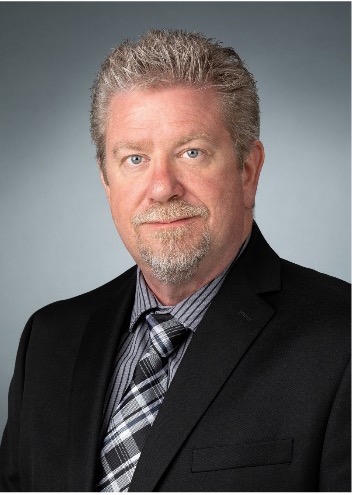
Mr. Bradford Watson
- Fellow, Principal Engineer, Lockheed Martin Space Company
- Member, IEEE
Bradford Watson holds a Master of Science in Electrical Engineering with an emphasis on Signal Processing from the University of Colorado at Denver and a Bachelor of Science in Electrical Engineering from the Metropolitan State University of Denver. Brad has been a Lockheed Martin Fellow since 2023 and a Principal Engineer with over two decades of experience in the development and implementation of digital signal processing algorithms for spaceflight applications. His areas of interest are digital communications, detection and characterization, and digital design. Additionally, Brad holds US patent #7675985: “Digital Channelizer Unit (DCU)” and authored a book on spectral channelization and reconstruction, “Channelizers and Reconstructors – A Design Guide.” Nova Science Publishers ISBN 1685071740. And has led the development of numerous modern digital processing payloads for the commercial, government, and international space sectors.
Presentation: Digital Signal Processors in Satellite Communications
Abstract: Modern communications satellites utilize a variety of techniques to implement point-to-point connectivity between terrestrial users and ground-based infrastructure. Among these are digital signal processing (DSP) algorithms that are implemented in several forms, providing flexibility and multi-user capability in lightweight, rugged platforms that can withstand the rigors of spaceflight. Presented are the types of platforms that currently exist, their orbits, their coverage and connectivity characteristics, the algorithms they use to manage user bandwidth effectively, and the hardware they are implemented on. Several examples are shown, along with typical block diagrams and performance characteristics, along with a perspective for future growth.
IEEE Denver Computer, Information Theory & Robotics Society, Computational Intelligence Society – Technical Meeting
February 21, 2024, 6:00 PM – 7:30 PM (MDT)
Denver IEEE Computer Society Guest Lecturer
Dr. Mark Crews

- PhD in Electrical Engineering
- LM Fellow: Advanced PNT Systems, Lockheed Martin
Dr. Mark Crews holds a Ph.D. in Electrical Engineering from the University of Oxford, United Kingdom. Dr. Crews is a retired Air Force Colonel. Currently within Lockheed Martin, Dr. Crews is the Advanced Programs Senior Manager for Positioning, Navigation, and Timing (PNT) at Lockheed Martin. Within Lockheed Martin Dr. Crews directs the development of the next generation GPS architecture including laser crosslinks and advanced navigation payloads. Dr. Crews works closely with Government customers to incorporate new requirements into innovative, compliant, and affordable designs. Previously, Dr. Crews’ roles have included GPS Chief Engineer at the GPS Directorate; Chief of the Starfire Optical Range Beam Control Division; Assistant Professor of Electrical Engineering at the USAF Academy; Mission Systems Architect at Ball Aerospace; and Chief Technology Officer at ITT Space Systems Division.
Presentation: The Global Positioning System Categories for Knowledge Representation
Abstract: The Global Positioning System (GPS) has greatly increased efficiency and effectiveness of multiple industries that leverage GPS signals for Positioning, Navigation, and Timing (PNT). The next generation of GPS III and GPS IIIF satellites are poised to increase performance for GPS users worldwide. GPS consists of three segments: space, ground, and user. The Space Segment includes a constellation of 31 satellites with six GPS III satellites in the constellation and four more available for launch. When launches begin in 2026, GPS IIIF satellites will broadcast 60X more anti-jam power for warfighters. Lockheed Martin also supports US Space Force operations of the GPS Control Segment, which includes a master and alternate master control stations with 16 worldwide monitor stations that constantly GPS satellite signals. User Segment includes billions of civilian GPS receivers and low millions of military GPS user equipment. The GPS enterprise has worked together seamlessly for decades to deliver robust PNT services to civil and military users. One of the most important examples of user services is the augmented use of GPS for Space-Based Augmentation System (SBAS) services utilized by civil aviation for precision approaches. SBAS provides integrity assurance for aviation operations without Instrument Landing System (ILS) infrastructure. This presentation provides an overview of GPS satellite modernization and how SBAS leverages GPS for Safety-of-Life operations.