IEEE Denver Computer, Information Theory & Robotics Society, Computational Intelligence Society – Technical Meeting
November 19, 2025, 6:00 PM – 7:30 PM (MDT)
Dr. Yuhong Liu

- Professor – Santa Clara University
- IEEE Computer Society Board of Governors Member and Chair – Geographic Activities Committee
Dr. Yuhong Liu received her B.S. and M.S. degrees from Beijing University of Posts and Telecommunications in 2004 and 2007, and her Ph.D. degree from the University of Rhode Island in 2012. Dr. Yuhong Liu is an Associate Professor in the Department of Computer Science and Engineering at Santa Clara University. Yuhong’s research focuses on responsible and trustworthy AI, security and privacy in Agentic AI, edge intelligence, IoT, and Blockchain. Yuhong has authored over 100 peer-reviewed papers and serves as an Associate Editor for IEEE Transactions on Circuits and Systems for Video Technology (TCSVT), IEEE Transactions on Service Computing (TSC), Multimedia Tools and Applications (MTAP), and APSIPA Transactions on Signal and Information Processing (TSIP). Yuhong also serves as a member of the IEEE Computer Society Board of Governors, Chair of the Geographic Activities Committee, Treasurer of the T&C Board, an IEEE Distinguished Visitor (2022–2024), and an APSIPA Distinguished Lecturer (2021–2022).
Presentation: Agentic AI – Powering the Next Wave of Energy Autonomy
Abstract: The energy sector is undergoing rapid transformation, driven by the rise of renewables, decentralization, and electrification. Utilities, operators, and enterprises face increasing pressure to manage complexity, volatility, and ambitious sustainability goals. Agentic AI for energy autonomy offers a powerful paradigm by enabling autonomous, goal-driven agents that optimize generation, distribution, and consumption in real time. Unlike traditional automation, agentic systems are adaptive, self-directed, and capable of long-horizon decision-making. They can coordinate distributed resources, ensure grid stability, and manage storage and demand response with minimal oversight. This talk explores the emerging research landscape, highlights opportunities, and showcases case studies that illustrate the potential and challenges of Agentic AI in energy systems.
IEEE Denver Computer, Information Theory & Robotics Society, Computational Intelligence Society – Technical Meeting
Oct 15, 2025, 6:00 PM – 7:30 PM (MDT)
Daniel M. Farkas, Ph.D.

- Physicist and Patent Agent
- Cozen O’Connor
Dr. Daniel Farkas earned his Ph.D. in atomic, molecular, and optical physics from Harvard University and a BS in physics (magna cum laude) from Yale University. He completed postdoctoral fellowships at Yale University and JILA (University of Colorado, Boulder). Dr. Farkas is a registered US patent agent at Cozen O’Connor, where he assists with patent prosecution, patentability determinations, and infringement analyses. Prior to patents, he was lead physicist and manager at ColdQuanta (now Infleqtion) in Boulder, where he was a principal investigator on several government R&D contracts to develop quantum technologies for quantum computing, atomic clocks, and accelerometers.Outside of work, Dr. Farkas has spent many years volunteering for Colorado FIRST, including as a coach for FIRST Lego League, a judge for FIRST Robotics Competition, and a volunteer at several other regional and state-level robotics events.
Presentation: Patents for Scientists and Engineers
Abstract: What we know today as a “utility patent” can be traced back to Renaissance Italy. Over the 500+ years since then, patents have become widely recognized as beneficial to society in many ways. As a result, most countries in the world today have a patent system and the number of patents issued annually continues to grow exponentially. In the first part of this talk, I will review the basics of what a patent is, including its components, how to get one, and some of the ways they are used to protect inventors (and their employers). In the second part of the talk, I will discuss what is and is not patentable by law, showing many examples from history of unusual patents and court cases that have shaped modern-day patent law. Of note is the recent explosion in artificial intelligence and machine learning, technologies that are particularly difficult to patent in the United States.
IEEE Denver Computer, Information Theory & Robotics Society, Computational Intelligence Society – Technical Meeting
Sep 17, 2025, 6:00 PM – 7:30 PM (MDT)
David Bondurant
- President/Principal Analyst – Vertical Memory
- IEEE Pikes Peak Section Chair
David Bondurant holds a BS Physics from Truman State, BSEE from Missouri S &T, and an MBA in Technology Management from University of Phoenix. Mr Bondurant has been involved with the computer and semiconductor industry for 54-years. David has been a computer architect at Control Data, Sperry-Univac, and Honeywell and with the VHSIC (Very High Speed Integrated Circuits) at Univac & Honeywell where he developed microprocessor and ASIC semiconductor products in bipolar CML, CMOS, and radiation hard CMOS. Havid has also contributed to emerging non-volatile RAM marketing at industry leading companies, Ramtron (FRAM), Enhanced Memory Systems (EDRAM, ESRAM), Simtek (non-volatile SRAM), and Freescale Semiconductor/Everspin Technologies (MRAM).
David Bondurant been involved with 5 successful start-up companies. Honeywell Digital Product Center provided ASIC components for Honeywell DPS-8 and Honeywell Bull DPS-7 mainframes systems and ETA Systems ETA-10 Supercomputer (the fastest computer in 1988). Enhanced Memory Systems delivered L2 Cache chips for HP PA-RISC microprocessor. Ramtron & Simtek continue to deliver FRAM and nvSRAM as part of Infineon Technology product line. Everspin Technologies is currently the leader in MRAM products worldwide. David is Distinguished Contributor of the IEEE Computer Society and is currently a candidate for Director-Elect of IEEE Region 5.
Presentation: 3D Memory, 3D Packaging: What Next?
Abstract: “If we make them smaller, we can make them faster” has been the approach to building faster computers over the last 70-years starting with the first transistors and continuing as we built increasingly more complex integrated circuits. More recently we have gone Beyond Moore’s Law to fabricate advanced supercomputers and AI computers using 3D Memory and 3D Packaging. In this talk, I review recent trends in 3D Memory and 3D Packaging which are driving these high performance system towards wafer scale systems with multiple reticle sized processors and 3D memories. We observe the next generation HBM4, high bandwidth 3D DRAM, and the emergence of the HBF, high bandwidth Flash memory, to increase memory capacity to serve larger databases.
IEEE Denver Computer, Information Theory & Robotics Society, Computational Intelligence Society – Technical Meeting
May 21, 2025, 6:00 PM – 7:30 PM (MDT)
Subbarao Pydikondala
- Principal Architect
- Senior Member, IEEE Computer Society
Mr. Subbarao Pydikondala holds a bachelor’s degree in Computer Science and Engineering from Bharathidasan University and an Executive MBA from Quantic. With over 20 years of experience, Mr. Pydikondala serves as a Principal Architect at DocuSign, leading enterprise transformation initiatives across AI, Revenue Operations, and integrated platforms such as Salesforce, Microsoft, and Oracle. Recognized for driving innovation in the enterprise domain, Mr. Pydikondala has presented at industry-leading events, including Dreamforce, focusing on Agentic AI and its safe adoption in enterprise workflows. Mr. Pydikondala’s work bridges strategic vision and real-world implementation, shaping how organizations embrace AI with digital agility. In addition, Mr. Pydikondala actively contributes to the IEEE Denver Computer Society, mentoring emerging tech talent and advancing community learning.
Presentation: The Rise of Agentic AI: Autonomy, Orchestration, and the Future of Intelligent Systems
Abstract: Agentic AI marks a pivotal shift from traditional, supervised AI to autonomous agents capable of pursuing complex goals with minimal input. This session introduces the core principles of Agentic AI, its differences from conventional models, and its growing role in enterprise automation. The discussion will feature real-world examples from healthcare, finance, and customer service to showcase how AI agents are streamlining operations and enhancing human productivity and will feature emerging innovations like Google Cloud’s Agentspace and Salesforce’s Agentforce 2.0. It also highlights key challenges—such as trust, ethics, and accountability—along with the guardrails needed for safe deployment. The session concludes with a look at research shaping the future of adaptive, collaborative AI agents.
IEEE Denver Computer, Information Theory & Robotics Society, Computational Intelligence Society, and Colorado School of Mines – Joint Technical Meeting (triple event).
April 24, 2024, 4:00 PM – 5:00 PM (MDT)
Willaim (Willl) Buziak
- Colorado School of Mines
- Masters-Thesis Student Computer Science
William Buziak is a first-year master’s student working under Dr. Iris Bahar. Mr. Buziak research is focused on computer architecture design and hardware security. William received his bachelor’s degree in mechanical engineering from the University of Tennessee, Knoxville before coming to Mines to research computer architecture. William has been invited to present at the Young Architect Workshop hosted by ASPLOS 2025.
Presentation: Secure Extensions for Simulated RISC-V Trusted Execution Environments.
Abstract: Enclaves like Keystone provide the benefit to both study the impact of their design as well as propose extensions to their standard for security. Architecture simulators like gem5 allow developers to rapidly iterate on designs and evaluate performance on real-world workloads. Currently, extending open-source Trusted Execution Environments (TEEs) require extensive understanding of both the TEE itself as well as the simulation tool. This work seeks to create an environment that assist developers in implementing and evaluating contributions to the Keystone enclave within the gem5 architectural simulator.
Jiuyi (Joey) Xu
- Colorado School of Mines
- PhD Student In Robotics
Jiuyi (Joey) Xu is a first-year Ph.D. student in Robotics at the Colorado School of Mines, where he conducts research on Generative AI, Image Generation, and Generative Reinforcement Learning under the supervision of Dr. Yangming Shi. Mr. Xu holds an M.S. in Computer Science from the University of Southern California and a B.E. in Software Engineering from Dalian University of Technology. Previously, Joey was a student research assistant at USC’s Institute for Creative Technologies, working on open-vocabulary object detection (OVOD) and open-vocabulary semantic segmentation (OVSS). Beyond research, Joey is an active peer reviewer for the Journal of Computing in Civil Engineering and has contributed to multiple academic conferences. He is also a student member of IEEE, ACM, and ASCE.
Presentation: Hetero-Diffusion Model: Generating High-Resolution Images from Low-Resolution Noise.
Abstract: Diffusion models have gained significant attention in the field of image generation, demonstrating remarkable success in generating images from pure noise through an iterative denoising process. Traditional diffusion models assume a consistent resolution between input and output, while super-resolution models generate high-resolution images from existing low-resolution images. Our proposed Hetero-Diffusion Model introduces a novel framework where image generation starts from low-resolution pure noise and progressively denoises it into a high-resolution image. By leveraging this heterogeneous resolution transition, we aim to enhance the quality and scalability of image generation tasks, offering new possibilities for applications in high-fidelity image synthesis and beyond.
Seth Dale
- Professor Colorado School of Mines
- Ph.D. Candidate in Computer Science
Seth Dale graduated from the University of Florida in 2017 with a bachelor’s in computational chemical engineering and a minor in computer science. Seth worked in industry on thermodynamic simulations for four years before joining the computer science PhD program at the Colorado School of Mines in 2021. Seth’s research focuses on interdisciplinary applications of physics-informed neural networks and scientific computing.
Presentation: Re-Engineering Scientific Software with Modern C++.
Abstract: Propelled by its speed and object-oriented language features, C++ has been the dominant programming language in scientific programming since its introduction in the early 2000s. Over the past decade, additions to the C++ standard have transformed the language in terms of developer convenience, readability, and efficiency. Despite these benefits, adoption of “Modern C++” is generally low in the scientific computing community due in large part to an absence of these new tools in current literature and education. In this talk we present C++ as a modern language and share our experiences utilizing new features to create readable, maintainable, and bug-free code through a case study in re-engineering legacy Fortran thermodynamics code.
IEEE Denver Computer, Information Theory & Robotics Society, Computational Intelligence Society, and Mine University – Technical Meeting
February 19, 2025, 6:00 PM – 7:30 PM (MDT)
Mr William Burgoyne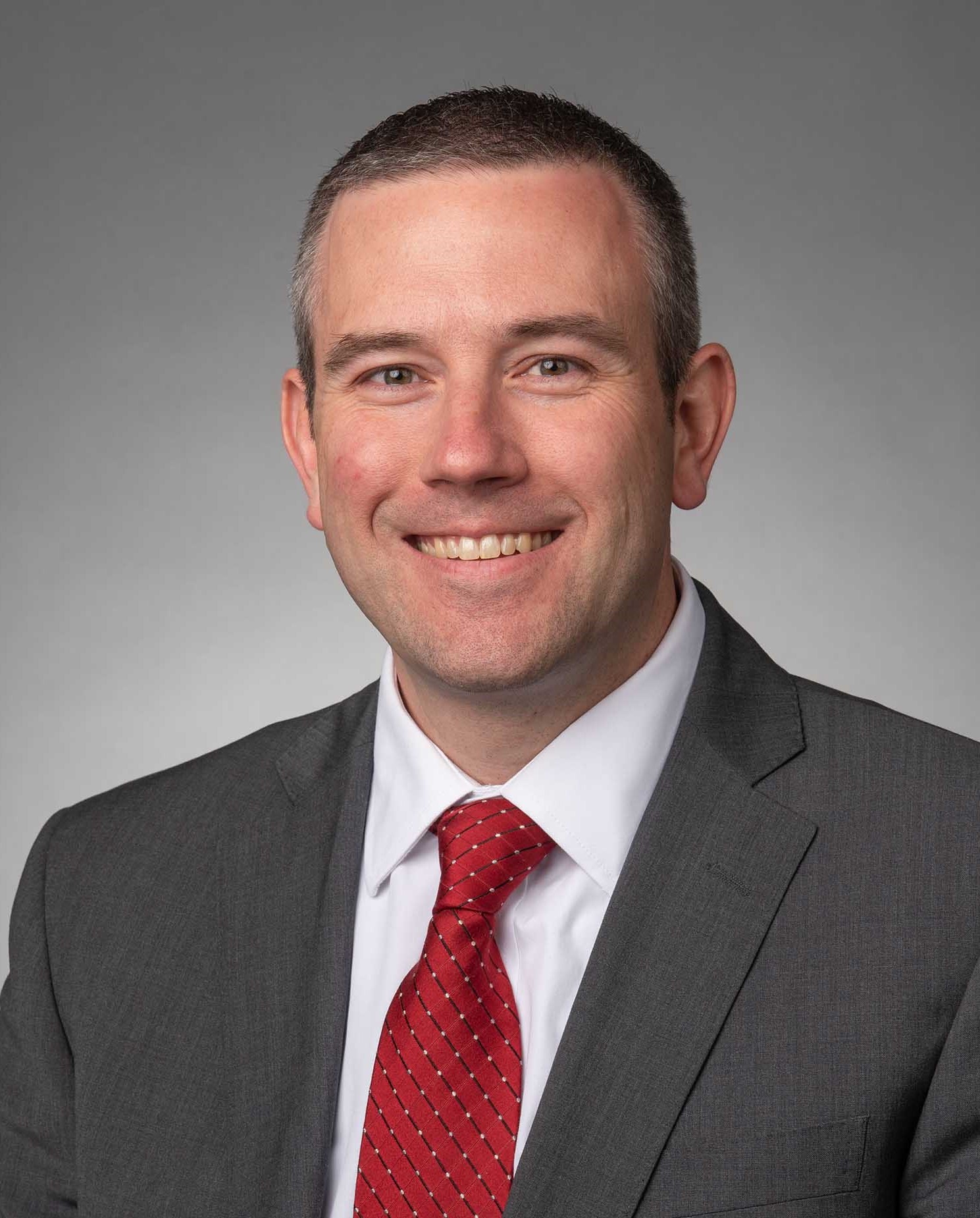
- Mechanical Engineer
- Control Systems Engineer, Lockheed Martin
Presentation: Launch Vehicle Control System Analysis: Bridging the Gap between Academia and Industry
Abstract: This presentation explores the essential skills and knowledge needed by control system engineers in the space launch industry, focusing on the gap between academic theory and practical industry applications. While graduates learn key concepts like linear and nonlinear systems, root-locus methods, and Matlab-based analysis, professionals in the field must go further by mastering Nichols plots, designing control schemes for multiple-input systems, and performing complex analyses in languages like Fortran. This talk aims to prepare future engineers by highlighting these advanced skills, ensuring they are well-equipped to contribute to the evolving demands of the space launch sector. Attendees will learn how to apply their academic foundations to real-world challenges and innovate within the industry.
IEEE Denver Computer, Information Theory & Robotics Society, Computational Intelligence Society, Electromagnetic Compatibility Society, and University of Colorado Boulder – Technical Meeting
February 13, 2025, 6:30 PM – 8:00 PM (MDT)
Dr Tim Michalka
- PhD Electrical Engineer
- Signal Integrity Expert Engineer
Presentation: Interconnection Scaling – Going Big and Going Small
Abstract: : This presentation will cover a high-level overview of interconnections between integrated circuits – trends over the past several decades and what technologies may support future trends, along with a discussion of basic signal integrity considerations for such interconnections. Over most of the past 50 years the scaling of silicon integration was the winning hand for increased performance with packaging and interconnections scaling at substantial lower rates. Fundamental challenges in nanometer process nodes have effectively ended the steadily increasing benefits of Moore’s Law so new paradigms for 2D, 2.5D, and 3D Heterogeneous Integration packaging technologies are being proposed and developed to keep system performance scaling moving forward. Rapidly moving a lot of data between chips is fundamental to all these approaches. One approach for dense, high bandwidth interconnections will be discussed in some detail to illustrate tradeoffs and discuss the limits of how interconnections between chips can reach the limits of interconnections within chips.
IEEE Denver Computer, Information Theory & Robotics Society, Computational Intelligence Society, and Colorado School of Mines – Joint Technical Meeting (triple event).
February 12, 2024, 4:00 PM – 5:00 PM (MDT)
Thong Quoc (Bill) Huynh
- Colorado School of Mines
- PhD Student Robotics Engineering
Bill is in the second year of his PhD in Robotics at the Colorado School of Mines, working in the Dynamic Automata Lab. Bill’s current research focuses on workspace-constrained motion planning and infeasibility proof. He plans to explore more on the topic of multi-agent task and motion planning in the near future, looking into the challenges of robot team decision-making that involve both discrete decisions (actions, ordering, etc.) and continuous decisions (motions).
Presentation: Reduced Dimensionality of State Space: Faster Motion Planning and Infeasibility Proofs.
Abstract: Sampling-based motion planning is often performed in configuration space, making it a computationally expensive task for manipulators with high degrees of freedom. Proving infeasibility in motion planning, an integrated process of motion planning itself, has the same limitation. Many real-world planning tasks come with constraints for the manipulator, e.g., welding in an exact line, or turning a valve only about its axis, and the constraints are typically represented as manifolds in the configuration space. We present a new approach to sampling-based motion planning with workspace constraints in which we construct an explicit workspace manifold based on the constraints and use a parametric state space in sampling with reduced dimension compared to the configuration space. The parameters include manifold coordinates that map to a unique pose and extra parameters as needed for inverse kinematics calculations. Our method works for manipulators with analytical inverse kinematics solutions, and we apply to the specific anthropomorphic 7-DOF (3R-1R-3R) arm in our experiments. With the reduced dimension of the state space in sampling, we can generate motion plans or infeasibility proofs in less time.
Jonathan Diller
- Colorado School of Mines
- PhD Student In Robotics
Jonathan completed a B.S. degree in Computer Science at the Pennsylvania State University at Harrisburg in 2020 and an M.S. degree in Computer Science at the Colorado School of Mines in 2022. Jonathan is currently pursuing a Ph.D. in Robotics at Mines and works in the Pervasive Computing Systems group under the guidance of Dr. Qi Han. Jonathan’s research focuses on systems-aware planning and tasking for robot teams. Jonathan was recognized as a 2024 Cyber-Physical Systems Rising Star and is heavily involved in his community at Mines, including organizing student-led research seminars, serving on the committee for a research symposium at the university, and acting as a graduate student advocate.
Presentation: Path-Finding for Energy-Sharing Drone-UGV Teams.
Abstract: Drones and Unmanned Ground Vehicles (UGVs) can be paired together to form symbiotic teams, where drones can quickly move over rough terrain while UGVs can charge and ferry around drones. In this talk, I will introduce two algorithms for planning patrolling paths for drone-UGV teams over indefinite time horizons. These algorithms utilize a second-order cone program that greatly improves performance over classic divide-and-conquer approaches. The results of my numerical simulations and field experiments demonstrate trade-offs in these algorithms and motivate areas of ongoing work.
Dr. Frankie Zhu
- Professor Colorado School of Mines
- PhD Aerospace Engineering at Cornell
Frances Zhu earned her B.S. in Mechanical and Aerospace Engineering from Cornell University, Ithaca in 2014 and a Ph.D. in Aerospace Engineering at Cornell in 2019. Dr. Zhu was a NASA Space Technology Research Fellow. From 2020 – 2024, she was an assistant research professor with the Hawaii Institute of Geophysics and Planetology at the University of Hawaii, specializing in machine learning, dynamics, systems, and controls engineering. Since 2025, she has been an assistant professor with the Colorado School of Mines within the Department of Mechanical Engineering, affiliated with the Robotics program and Space Resources Program.
Presentation: Autonomous Robots Traversing Space Environments.
Abstract: Exploring extreme terrain is pertinent for extraplanetary surface exploration and search and rescue missions here on Earth. These high-risk operations are best carried out by autonomous robots, minimizing harm to humans. In this talk, I will describe the difficulties associated with robots traversing extreme terrain and propose an autonomy architecture. The robot follows an encoded procedure of objective synthesis, path planning, adaptive dynamics modeling and control policy generation. I will expand upon each of the procedural steps in the robot’s autonomous exploration algorithm and tell this robot’s story in the context of lunar surface mission seeking ice.